Report an issue
Tell us what's wrong and we'll take a look.
Thanks – we got it. We'll review and follow up if needed.
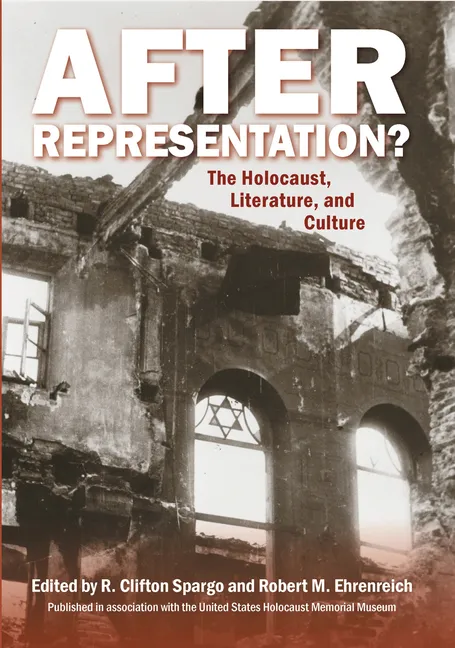
As experts in the study of literature and culture, the scholars in this collection examine the shifting cultural contexts for Holocaust representation and reveal how writersùwhether they write as witnesses to the Holocaust or at an imaginative distance from the Nazi genocideùarticulate the shadowy borderline between fact and fiction, between event and expression, and between the condition of life endured in atrocity and the hope of a meaningful existence. What imaginative literature brings to the study of the Holocaust is an ability to test the limits of language and its conventions. After Representation? moves beyond the suspicion of representation and explores the changing meaning of the Holocaust for different generations, audiences, and contexts.
Robert M Ehrenreich
Robert M. Ehrenreich is director of the United States Holocaust Memorial Museum's Academic Research and Dissemination Division. He is the author or editor of four books, an international journal, and over thirty articles and reviews on the Holocaust, Holocaust studies, and European history and prehistory. His research focuses on Holocaust material culture and digital humanities. Ehrenreich has also worked on Holocaust representation and the perpetrator-victim-bystander constellation. He was previously a postdoctoral fellow at the Smithsonian; a research associate at the University of Illinois, Urbana; a senior staff scientist at The National Academies; and an associate research professor at George Washington University.


Why Readwise Books?
Readwise Books is an ebook & audiobook platform that automatically logs how much you and your friends read, making it fun and easy to read more. Learn more →