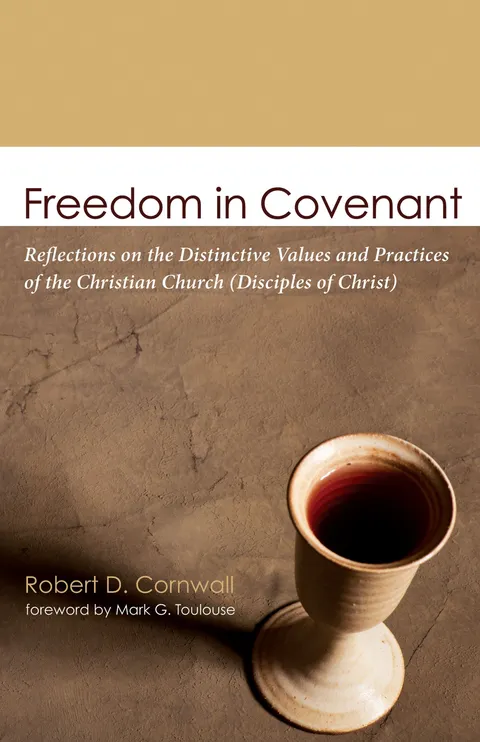
Freedom in Covenant
Reflections on the Distinctive Values and Practices of the Christian Church (Disciples of Christ)
Report an issue
Tell us what's wrong and we'll take a look.
Thanks – we got it. We'll review and follow up if needed.
In an age of decreasing denominational loyalty, questions of identity have become important. Both church members and inquirers wonder what to make of a denomination’s core values, mission, and common practices. Because the Christian Church (Disciples of Christ) was born as a movement of reform on the American frontier during the early nineteenth century, it is marked by the time and place of its birth. The message it offered at the time was one of Christian unity rooted in theological simplicity and freedom of belief and practice. This message influenced the way the tradition came to understand biblical interpretation, theology, the sacraments, ministry, and its eschatology. As the movement matured, many recognized that this message of freedom could lead to unfettered individualism and tended to undermine congregational life and cooperation beyond the congregation. In response, Disciples leaders turned to the biblical idea of covenant to balance the message of freedom and link congregations with other forms of church without creating hierarchical systems. If, as some have suggested, this is a movement whose time has come, then it is important to understand the movement’s identity and core values, which have been formed within the fulcrum of the tension existing between freedom and covenant.
Robert D. Cornwall
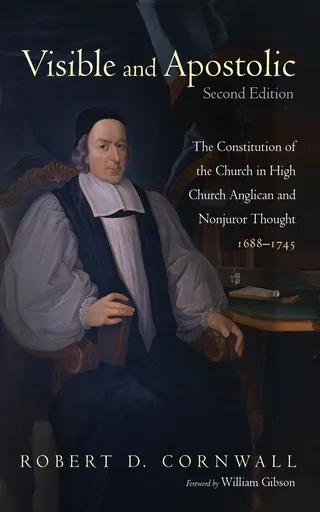
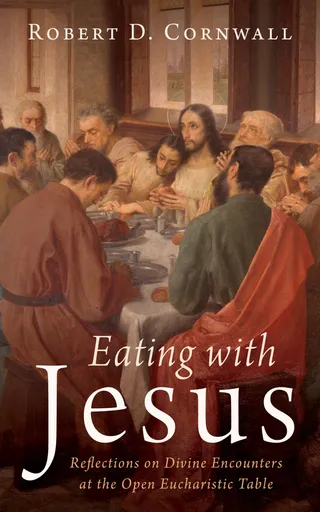
Robert D. Cornwall is Minister Emeritus of Central Woodward Christian Church (Disciples of Christ) living in Troy, Michigan. He has served as board chair of Christian Unity and Interfaith Ministries of the Christian Church (Disciples of Christ) and Editor of Sharing the Practice. He received his Ph.D. in Historical Theology from Fuller Theological Seminary (1991). His books include Second Thoughts about Hell: Understanding What We Believe co-authored with Ronald J. Allen (WJK, 2025); Eating With Jesus: Reflections on Divine Encouinters at the Open Eucharistic Table (Cascade, 2025); Second Thoughts about the Second Coming, with Ronald J. Allen (WJK, 2023); Religion, Politics and Dissent, 1660-1832, co-edited with William Gibson (2010).
More by Robert D. Cornwall







Why Readwise Books?
Readwise Books is an ebook & audiobook platform that automatically logs how much you and your friends read, making it fun and easy to read more. Learn more →