Report an issue
Tell us what's wrong and we'll take a look.
Thanks – we got it. We'll review and follow up if needed.
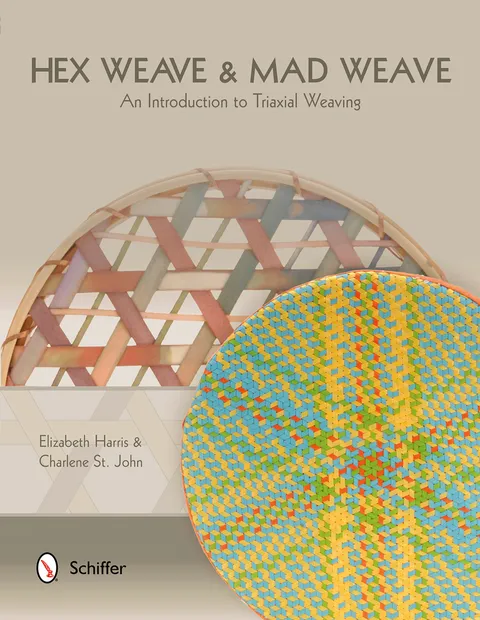
Triaxial weaving is based on three axes, or directions, instead of the two directions used in most Western textiles. It is among the oldest forms of weaving, and in today's world, industry uses triaxial weaving to produce strong, stable fabrics. There is also a growing interest in triaxial weaving as an art form. Through more than 200 diagrams and photos, you will learn the basics of the two simplest forms of triaxial weaving - hex weave and mad weave. Practice your new skills with thirteen projects. The five hex weave projects are stationery stars, a tiny Christmas tree made from recycled holiday cards, an accordion journal, and a faux bull's eye clock. Eight mad weave projects cover pillows, tote and evening bags, a table runner, and eyeglass cases. Chapters include designing patterns, color, using paper, ribbons and yardage, and a troubleshooting section. This in-depth guide will inspire weavers, basket makers, quilters, and teachers alike.
Elizabeth Harris
Elizabeth Harris is an award-winning reporter at The New York Times, and the author of the novel How to Sleep at Night. She lives in New York City with her wife and kids.
More by Elizabeth Harris











Why Readwise Books?
Readwise Books is an ebook & audiobook platform that automatically logs how much you and your friends read, making it fun and easy to read more. Learn more →