Report an issue
Tell us what's wrong and we'll take a look.
Thanks – we got it. We'll review and follow up if needed.
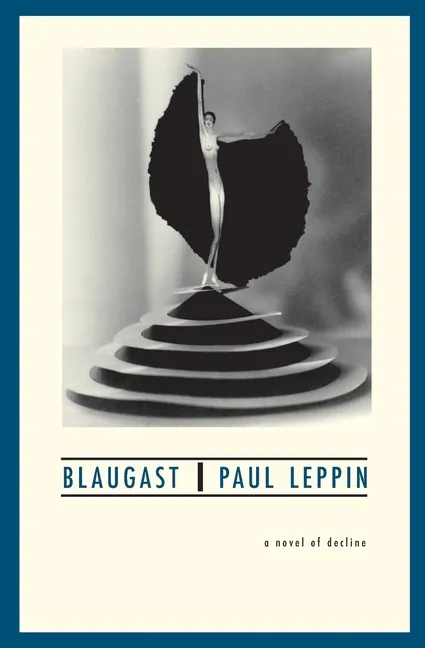
Leppin's final novel, which he never saw published (the manuscript languished for decades after his death in the archives in Prague), Blaugast is an indictment of the despotic and vulgar, an exploration of the sadistic tendencies found among the "moral" and "respectable." Max Brod's depiction of Leppin as "a poet of eternal disillusionment, at once a servant of the Devil and an adorer of the Madonna" nowhere rings more true than here.
Paul Leppin
Paul Leppin was born in Prague on November 27, 1878, the second son of a failed clockmaker and a former teacher. Forced by the economic difficulties of his family to forgo a university education, he entered the civil service upon graduation from Gymnasium, working as an accountant for the Postal Service until his release due to reasons of physical disability. It was here that he witnessed firsthand the life-numbing existence of his contemporaries. Beginning with the appearance of his first novel, The Doors of Life, in 1901, his poetry, prose, and criticism appeared regularly in Prague and Germany over the next thirty years. Leppin was also one of the few German writers to have close contacts with the Czech literary community, translating Czech poetry and writing articles on Czech literature and art for German periodicals. As a leading figure of a young generation of Prague German writers, calling themselves "Jung-Prag" and centered around the two literary periodicals he edited, Fruhling and Wir, Leppin sought to combat the conservatism and provincialism of the city's established culture. Although many German writers eventually left Prague, Leppin could not live elsewhere and remained in the city after the formation of the Czechoslovak Republic in 1918, writing novels, plays (performed at the Neues Deutsches Theatre), stories, and poems Prague always forming a strong influence. He became Secretary of the Protective Union of German Writers in the Czechoslovak Republic that had been founded by Oskar Baum and Johannes Urzidil. Leppins contribution to the city's literature and culture was recognized both in 1934, when he was awarded the Schiller Memorial Prize, and in 1938, on the occasion of his 60th birthday, when he received the Czechoslovak Ministry of Culture Award for Writers. In the same year two volumes of his Prague Rhapsody appeared, marking the end of his publishing activity. In 1939 he was detained by the Gestapo after the German occupation of the city and, after his release, suffered a stroke from which he never fully recovered. He died in Prague of syphilis on April 10, 1945 largely unknown and forgotten.
More by Paul Leppin


Why Readwise Books?
Readwise Books is an ebook & audiobook platform that automatically logs how much you and your friends read, making it fun and easy to read more. Learn more →