Report an issue
Tell us what's wrong and we'll take a look.
Thanks – we got it. We'll review and follow up if needed.
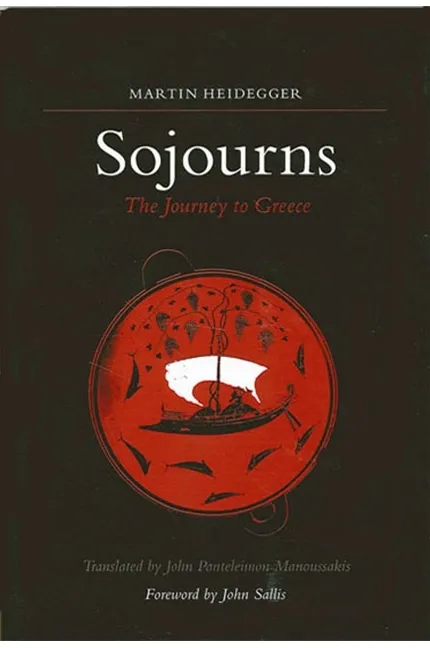
Heidegger's philosophical journal, written during his first visit to Greece in 1962, and appearing here in English for the first time.
The story of Martin Heidegger's enigmatic search for truth in the land that inspired his philosophy, Aufenthalte (Sojourns) is the philosophical journal that he kept during his first visit to Greece in the spring of 1962. Available here for the first time in English, this invaluable translation offers not only a rare and intimate view of its author, but also a chance to observe Heidegger working with his philosophical concepts outside the lecture hall, applying them in concrete cultural and historical contexts. Here we find Heidegger in dialogue with Greek history itself as it has left traces in the land, and as it has been recorded on various monuments and works of art.
Martin Heidegger
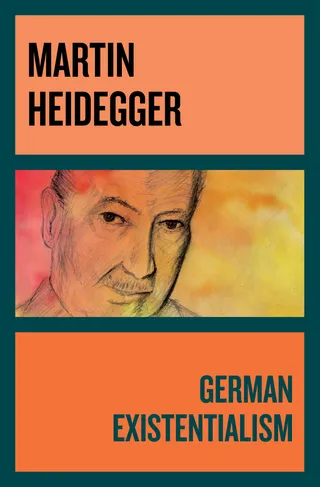
Heidegger’s contribution to the growth and development of National Socialism was immense. In this small anthology, Dr. Runes endeavors to point to the utter confusion Heidegger created by drawing, for political and social application of his own existentialism and metaphysics, upon the decadent and repulsive brutalization of Hitlerism. Martin Heidegger was a philosopher most known for his contributions to German phenomenological and existential thought. Heidegger was born in rural Messkirch in 1889 to Catholic parents. While studying philosophy and mathematics at Albert-Ludwig University in Freiburg, Heidegger became the assistant for the philosopher Edmund Husserl. Influenced by Husserl, Kierkegaard, and Nietzsche, Heidegger wrote extensively on the quality of Being, including his Opus Being and Time. He served as professor of philosophy at Albert-Ludwig University and taught there during the war. In 1933, Heidegger joined the National Socialist German Worker’s (or Nazi) Party and expressed his support for Hitler in several articles and speeches. After the war, his support for the Nazi party came under attack, and he was tried as a sympathizer. He was able to return to Albert Ludwig University, however, and taught there until he retired. Heidegger continued to lecture until his death in 1973.
More by Martin Heidegger






Why Readwise Books?
Readwise Books is an ebook & audiobook platform that automatically logs how much you and your friends read, making it fun and easy to read more. Learn more →