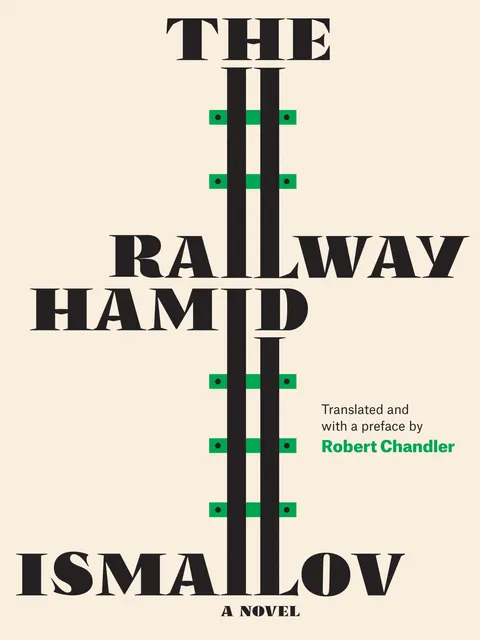
The Railway
Report an issue
Tell us what's wrong and we'll take a look.
Thanks – we got it. We'll review and follow up if needed.
“In the steppe near Tashkent they came upon a never-ending ladder with wooden rungs and iron rails and that stretched across the earth from horizon to horizon ... Whistling and thundering, a snake-like wonder hurtled past them, packed both on the inside and on top with infidels shouting and waving their hands. ‘The End of the World!’ thought both Mahmud-Hodja the Sunni and Djebral the Shiite.”
Set mainly in Uzbekistan between 1900 and 1980, The Railway introduces to us the inhabitants of the small town of Gilas on the ancient Silk Route. Among those whose stories we hear are Mefody-Jurisprudence, the town's alcoholic intellectual; Father Ioann, a Russian priest; Kara-Musayev the Younger, the chief of police; and Umarali-Moneybags, the old moneylender. Their colorful lives offer a unique and comic picture of a little-known land populated by outgoing Mullahs, incoming Bolsheviks, and a plethora of Uzbeks, Russians, Persians, Jews, Koreans, Tatars, and Gypsies.
At the heart of both the town and the novel stands the railway station—a source of income and influence, and a connection to the greater world beyond the town. Rich and picaresque, The Railway is full of color. Sophisticated yet with a naive delight in storytelling, it chronicles the dramatic changes felt throughout Central Asia in the early twentieth century.






Why Readwise Books?
Readwise Books is an ebook & audiobook platform that automatically logs how much you and your friends read, making it fun and easy to read more. Learn more →