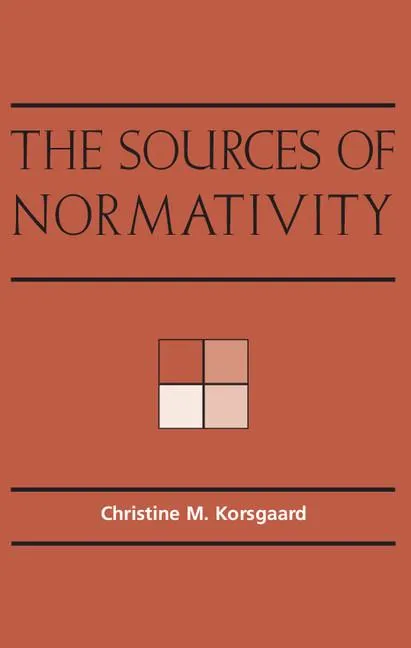
The Sources of Normativity
Report an issue
Tell us what's wrong and we'll take a look.
Thanks – we got it. We'll review and follow up if needed.
Ethical concepts are, or purport to be, normative. They make claims on us: they command, oblige, recommend, or guide. But where does their authority over us come from? Christine Korsgaard identifies and examines four accounts of the source of normativity that have been advocated by modern moral philosophers--voluntarism, realism, reflective endorsement, and the appeal to autonomy--and shows how Kant's autonomy-based account emerges as a synthesis of the other three. Her discussion is followed by commentary from G.A. Cohen, Raymond Geuss, Thomas Nagel, and Bernard Williams, and a reply by Korsgaard.
Christine M Korsgaard
Christine M. Korsgaard is Arthur Kingsley Porter Professor of Philosophy at Harvard University. She is the author of Self-Constitution: Agency, Identity, and Integrity (2010), The Constitution of Agency (2009), The Sources of Normativity (Cambridge, 1996) and Creating the Kingdom of Ends (Cambridge, 1996).
More by Christine M Korsgaard


Why Readwise Books?
Readwise Books is an ebook & audiobook platform that automatically logs how much you and your friends read, making it fun and easy to read more. Learn more →