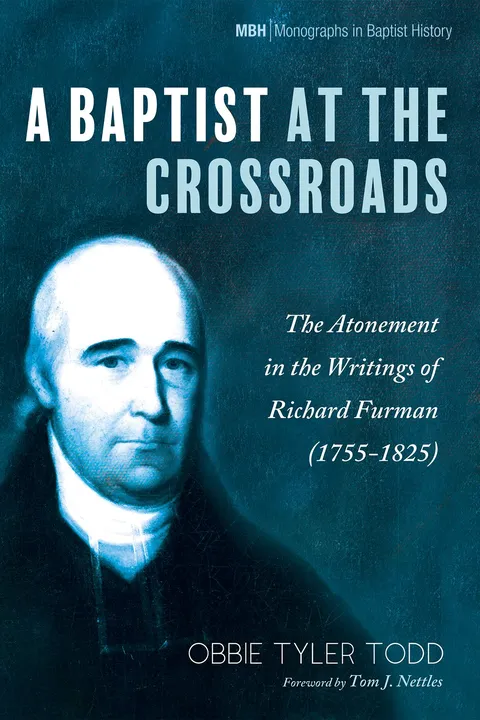
A Baptist at the Crossroads
The Atonement in the Writings of Richard Furman (1755-1825)
Report an issue
Tell us what's wrong and we'll take a look.
Thanks – we got it. We'll review and follow up if needed.
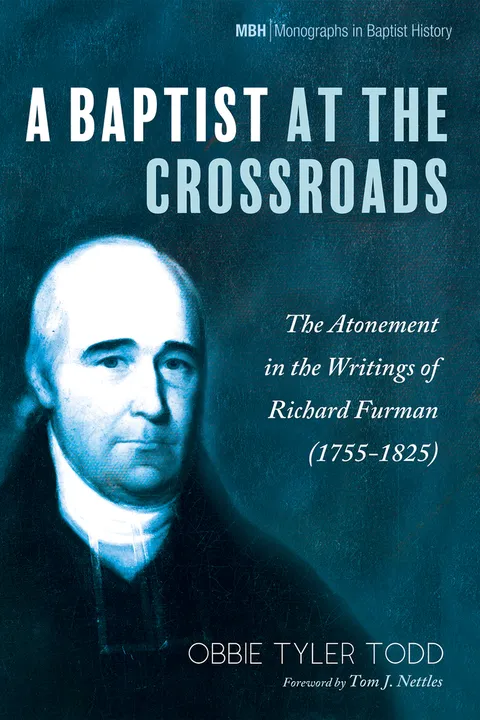
South Carolina Baptist Richard Furman (1755-1825) personified a host of seeming contradictions. As a Regular Baptist baptized by a Separate Baptist, an ardent patriot with puritan sensibilities, a Federalist who zealously defended religious liberty, and a slave-owning aristocrat who associated with backwoods revivalists, Furman is a complex figure in American history. His doctrine of atonement exhibited this same complexity, as he uniquely held to both a penal substitutionary theory of the atonement as well as to a moral governmental view, models of the atonement that were often conceived as mutually exclusive in the nineteenth century. Furman was the first of his American Baptist kind to attempt to integrate these two models. As a Baptist standing at the political, cultural, and theological crossroads of America, Furman blended Edwardsean and confessional Calvinism, Regular and Separate Baptist traditions, and a host of other elements into his theology, laying the groundwork for an entire generation of Southern Baptists who followed in his theological footsteps.
Obbie Tyler Todd
Obbie Tyler Todd is pastor of Third Baptist Church in Marion, Illinois, and adjunct professor of church history at New Orleans Baptist Theological Seminary. He is the author of Let Men Be Free: Baptist Politics in the Early United States, 1776-1835.
More by Obbie Tyler Todd


Why Readwise Books?
Readwise Books is an ebook & audiobook platform that automatically logs how much you and your friends read, making it fun and easy to read more. Learn more →