Report an issue
Tell us what's wrong and we'll take a look.
Thanks – we got it. We'll review and follow up if needed.
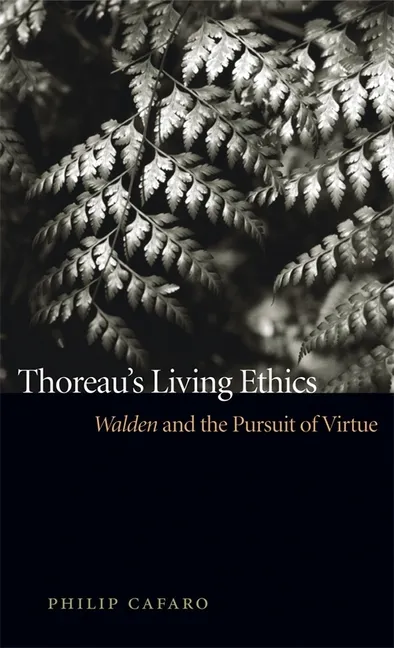
Thoreau's Living Ethics is the first full, rigorous account of Henry Thoreau's ethical philosophy. Focused on Walden but ranging widely across his writings, the study situates Thoreau within a long tradition of ethical thinking in the West, from the ancients to the Romantics and on to the present day. Philip Cafaro shows Thoreau grappling with important ethical questions that agitated his own society and discusses his value for those seeking to understand contemporary ethical issues.
Cafaro's particular interest is in Thoreau's treatment of virtue ethics: the branch of ethics centered on personal and social flourishing. Ranging across the central elements of Thoreau's philosophy—life, virtue, economy, solitude and society, nature, and politics—Cafaro shows Thoreau developing a comprehensive virtue ethics, less based in ancient philosophy than many recent efforts and more grounded in modern life and experience. He presents Thoreau's evolutionary, experimental ethics as superior to the more static foundational efforts of current virtue ethicists.
Another main focus is Thoreau's environmental ethics. The book shows Thoreau not only anticipating recent arguments for wild nature's intrinsic value, but also demonstrating how a personal connection to nature furthers self-development, moral character, knowledge, and creativity. Thoreau's life and writings, argues Cafaro, present a positive, life-affirming environmental ethics, combining respect and restraint with an appreciation for human possibilities for flourishing within nature.


Why Readwise Books?
Readwise Books is an ebook & audiobook platform that automatically logs how much you and your friends read, making it fun and easy to read more. Learn more →