Report an issue
Tell us what's wrong and we'll take a look.
Thanks – we got it. We'll review and follow up if needed.
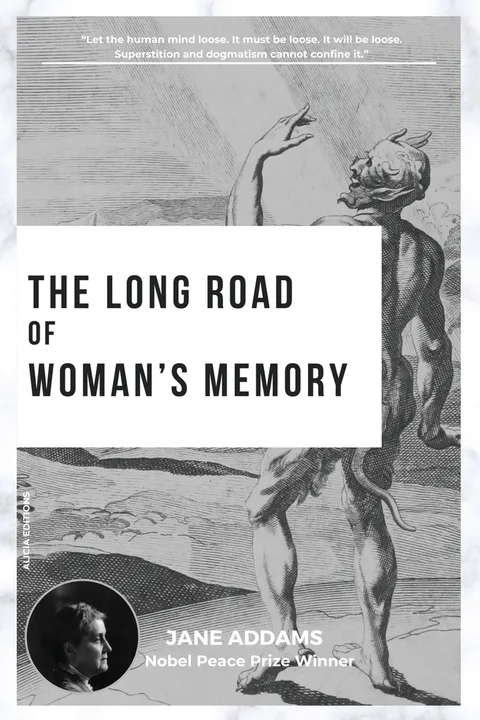
A powerful and deeply human exploration of women's memory, storytelling, and social change.
In this remarkable work, Nobel Peace Prize laureate Jane Addams reveals how memory preserves the hidden history of women's lives and becomes a force for social transformation. Through vivid accounts drawn from her work at Hull House, Addams shows how personal stories illuminate the struggles, resilience, and aspirations of immigrant women in a rapidly changing society.
At the center of the book lies the extraordinary legend of the "Devil Baby" said to haunt Hull House in 1915. Rather than dismissing the story as superstition, Addams uncovers its deeper meaning, showing how the tale encouraged elderly women to share memories of hardship, sacrifice, and survival. These stories reveal a powerful collective memory that connects private experience with social history.
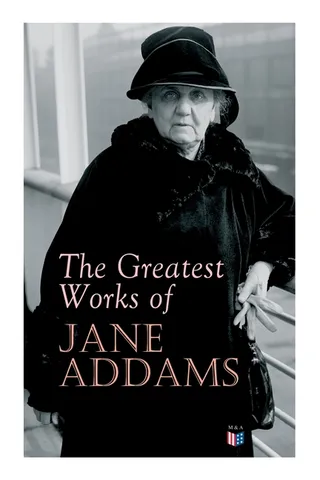
Jane Addams (1860-1935), often called the "Mother of Social Work," was a pioneering social reformer, feminist thinker, and co-founder of Hull House in Chicago, one of the most influential settlement houses in the United States. A leading voice for social justice, women's rights, and peace, she was awarded the Nobel Peace Prize in 1931 for her lifelong humanitarian work. Her writings remain foundational to the history of feminism and modern social reform.
Addams also demonstrates how memory can become a force of resistance. Recalling injustice and suffering inspired women to organize, demand reform, and challenge the social order - from labor activism and the defense of unmarried mothers to movements for peace and human dignity.
Both intimate and visionary, this classic work offers a unique perspective on the history of women, social reform, and collective memory. It remains one of Jane Addams's most original and thought-provoking books, revealing how remembered lives can reshape society itself.
Jane Addams
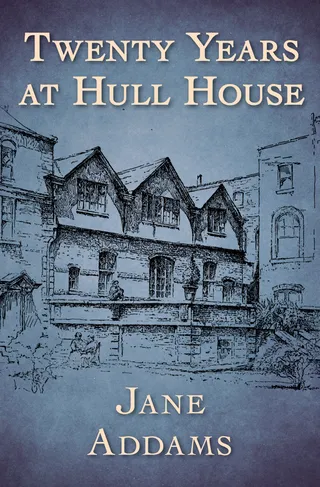
Jane Addams (1860–1935) cofounded the Hull House—one of the first settlement houses in the United States—in Chicago, Illinois, in 1889. She served as the first female president of the National Conference of Charities and Corrections and the first president of the Women’s International League for Peace and Freedom. In 1911, Addams helped establish the National Federation of Settlements. For her valiant activism on behalf of mothers, families, and the working class, Addams was awarded the Nobel Peace Prize in 1931, becoming the first American woman to win the prize. Addams’s memoir Twenty Years at Hull House chronicles her life devoted to activism and the betterment of mankind.
More by Jane Addams




Why Readwise Books?
Readwise Books is an ebook & audiobook platform that automatically logs how much you and your friends read, making it fun and easy to read more. Learn more →