
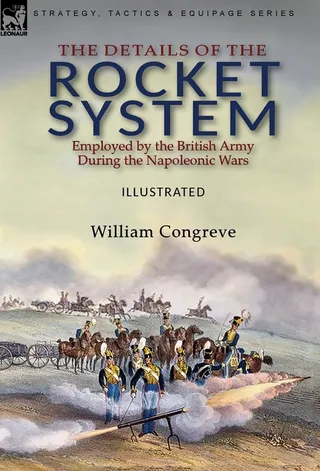
The Details Of The Rocket System
Report an issue
Tell us what's wrong and we'll take a look.
Thanks – we got it. We'll review and follow up if needed.
A razor-smart lampoon of power, pride, and ambition, The Details Of The Rocket System distills the wit and bustle of London 1700s society into a sparkling verse-drama. A single read will leave you aware of satire as a living breath, not a dusty label. This restored edition revisits William Congreve's satirical verse drama with clarity and care, drawing a line from Restoration era wit to today's screens and pages. The form-compact, live-stage verse-exposes military technology satire and the foibles of high society in one breath, offering both sharp humour and a studious lens on eighteenth century comedy, contemporary wit, and the social theatre of early eighteenth Britain. For classic literature readers and curious newcomers alike, the work rewards rereadings and close attention to language, rhythm, and the sly social choreography beneath every punchy couplet. Out of print for decades and now republished by Alpha Editions. Restored for today's and future generations. More than a reprint - a collector's item and a cultural treasure. For casual readers, this is a sparkling introduction to Pepys-era theatre and the brave mischief of restoration dramatists. For collectors, it is a carefully curated bridge to a vanished London, a testimony to the era's enduring appetite for satire, science, and social spectacle. A concise, exhilarating doorway to restoration era satire, military technology satire, and the detailed world of classic literature readers.
William Congreve
William Congreve (1670-1729) was an English playwright, and one of the most sophisticated exponent of the comedy of manners during the Restoration era. Congreve wrote five plays before he was 30. His first, The Old Bachelor, was an enormous success at Drury Lane in 1693, in a production starring Thomas Betterton and Mrs Bracegirdle. According to Congreve he wrote the play to amuse himself during a convalescence. The Double Dealer (1694) was not so well received but in 1695 he produced another hit, Love for Love (again with Betterton and Mrs Bracegirdle), to open the new Lincoln's Inns Fields Theatre. Its success secured his reputation and earned him a share in the theatre. His promise to write at least one play a year for the theatre of which he was now a part owner, was unfortunately not fulfilled. Congreve's only tragedy, The Mourning Bride (1697), was his most popular work during his lifetime but is now rarely seen. It starred Mrs Bracegirdle as Almeria, a part that became much coveted by tragic actresses. In 1700 The Way of the World - a highly sophisticated and complex work now considered his masterpiece - met with a cool reception. This failure, together with his continued discomfort at having been attacked in Jeremy Collier's influential pamphlet A Short View of the Profaneness and Immorality of the English Stage (1698), persuaded him to retire. (Congreve had replied to Collier with little effect in Amendments of Mr Collier's False and Imperfect Citations.) Voltaire later visited him and accused him of wasting his genius. Congreve told him he wished to be visited as a gentleman, not as an author. To this Voltaire replied that if Mr Congreve were only a gentleman, he would not have bothered to call upon him. Congreve was by all accounts a warm man who won the love and respect of his many friends. John Dryden called him the equal of Shakespeare, Alexander Pope dedicated his translation of the Iliad to him in 1715, and John Gay called him an 'unreproachful man'. When he died he left nearly all of his £10,000 estate to his mistress, Henrietta, the second Duchess of Marlborough, who arranged for his burial in Westminster Abbey.
More by William Congreve








Why Readwise Books?
Readwise Books is an ebook & audiobook platform that automatically logs how much you and your friends read, making it fun and easy to read more. Learn more →