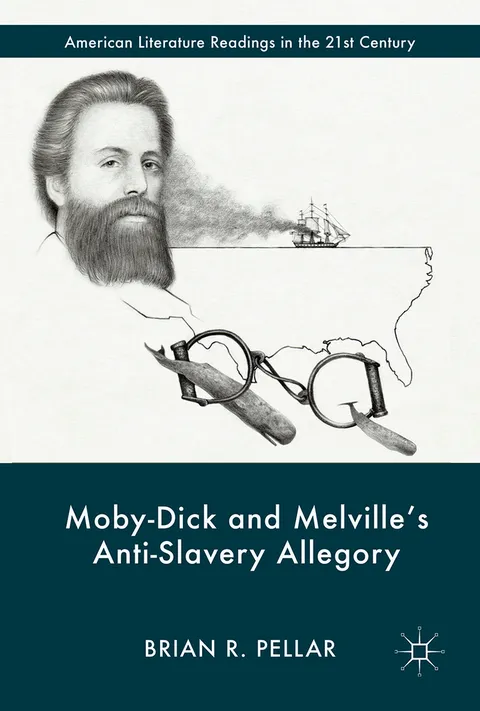
Moby-Dick and Melville's Anti-Slavery Allegory
Report an issue
Tell us what's wrong and we'll take a look.
Thanks – we got it. We'll review and follow up if needed.
This book unfurls and examines the anti-slavery allegory at the subtextual core of Herman Melville's famed novel, Moby-Dick. Brian Pellar points to symbols and allusions in the novel such as the albinism of the famed whale, the "Ship of State" motif, Calhoun's "cords," the equator, Jonah, Narcissus, St. Paul, and Thomas Hobbe's Leviathan. The work contextualizes these devices within a historical discussion of the Compromise of 1850 and subsequently strengthened Fugitive Slave Laws. Drawing on a rich variety of sources such as unpublished papers, letters, reviews, and family memorabilia, the chapters discuss the significance of these laws within Melville's own life.
After clarifying the hidden allegory interconnecting black slaves and black whales, this book carefully sheds the layers of a hidden meaning that will be too convincing to ignore for future readings: Moby-Dick is ultimately a novel that is intimately connected with questions of race, slavery, and the state.



Why Readwise Books?
Readwise Books is an ebook & audiobook platform that automatically logs how much you and your friends read, making it fun and easy to read more. Learn more →