
Valerius Flaccus, Argonautica
Report an issue
Tell us what's wrong and we'll take a look.
Thanks – we got it. We'll review and follow up if needed.
Swollen seas, erotic monsters, Greek passion gone Latin, deftly
This 1st-century AD Latin version of the earlier Greek epic features exotic lands, wondrous monsters and a sea voyage over swells of young love. Valerius Flaccus lent sharp Roman refinements and erotic passion to the tale, which are skillfully sustained in this careful and appealing modern translation in English verse.
Apollonius Rhodius' epic poem Argonautica, written in Greek during the 3rd century BC, has become the de facto standard version of the story of Jason and the Argonauts and their quest for the Golden Fleece. Valerius Flaccus' Latin epic of the last 1st century AD is by contrast little known, even to those well-read in ancient literature. This translation offers an accurate and appealing version in English verse.
Flaccus' Argonautica lends keen Roman touches to the tale, amplifying the sense of adventure and the erotic passion found in the Greek. It offers vicarious travel to exotic lands, gripping heroism before wondrous monsters and a dream team of famous Greek heroes. The stirring sea voyage is spiced by the blossoming love of Jason and Medea, young passion not yet gone sour. Michael Barich's deft translation and lyrical grace notes will delight devotees and newcomers to this timeless classic.
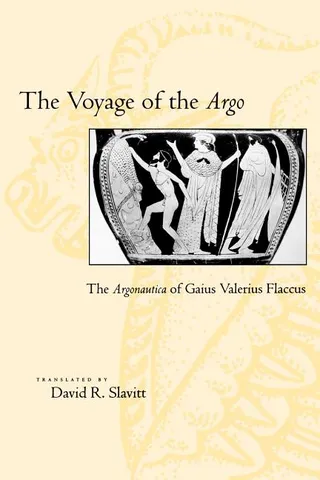
Many know of this tale via the 1963 Columbia Pictures film, with its stop-motion animation by Ray Harryhausen. Not many know (why would they?) that the cover artwork by Kenyon student Thomas Chappell Lewis was made on Post-it Notes. Examine the cover carefully and you'll see them. And now you're one of not-many.


Michael Barich
Translated by
Michael Barich has taught at Kenyon College in Ohio since 1985. His courses include Greek and Latin at all levels, literature in translation, and ancient history, and he has recently offered advanced Greek and Latin courses on Plato, Aristophanes, and Petronius. His scholarly work is devoted in particular to epic poetry and the literature of the early Roman Empire. Barich also has had a lifelong interest in astronomy, and for many years has helped conduct public sessions at Kenyon's Franklin Miller Observatory to introduce students and others to the wider universe. He earned his B.A. at Haverford College and his Ph.D. at Yale.


Why Readwise Books?
Readwise Books is an ebook & audiobook platform that automatically logs how much you and your friends read, making it fun and easy to read more. Learn more →