Memorial
Report an issue
Tell us what's wrong and we'll take a look.
Thanks – we got it. We'll review and follow up if needed.
Matthew Arnold praised the Iliad for its 'nobility', as has everyone ever since -- but ancient critics praised it for its enargeia, its 'bright unbearable reality' (the word used when gods come to earth not in disguise but as themselves). To retrieve the poem's energy, Alice Oswald has stripped away its story, and her account focuses by turns on Homer's extended similes and on the brief 'biographies' of the minor war-dead, most of whom are little more than names, but each of whom lives and dies unforgettably - and unforgotten - in the copiousness of Homer's glance.
'The Iliad is an oral poem. This translation presents it as an attempt - in the aftermath of the Trojan War - to remember people's names and lives without the use of writing. I hope it will have its own coherence as a series of memories and similes laid side by side: an antiphonal account of man in his world... compatible with the spirit of oral poetry, which was never stable but always adapting itself to a new audience, as if its language, unlike written language, was still alive and kicking.'
- Alice Oswald
Alice Oswald
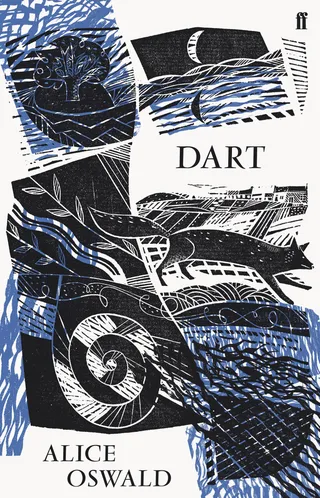
Alice Oswald lives in Devon and is married with three children. Her collections include Dart, which won the 2002 T.S. Eliot Prize, Woods etc. (Geoffrey Faber Memorial Prize), A Sleepwalk on the Severn (Hawthornden Prize), Weeds and Wildflowers (Ted Hughes Award), Memorial (Warwick Prize for Writing), and Falling Awake, which won the 2016 Costa Poetry Award and the Griffin Prize for Poetry. She served as the University of Oxford Professor of Poetry from 2019 to 2023.
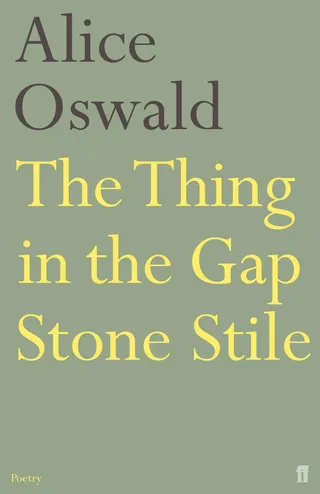
More by Alice Oswald








Why Readwise Books?
Readwise Books is an ebook & audiobook platform that automatically logs how much you and your friends read, making it fun and easy to read more. Learn more →