Report an issue
Tell us what's wrong and we'll take a look.
Thanks – we got it. We'll review and follow up if needed.
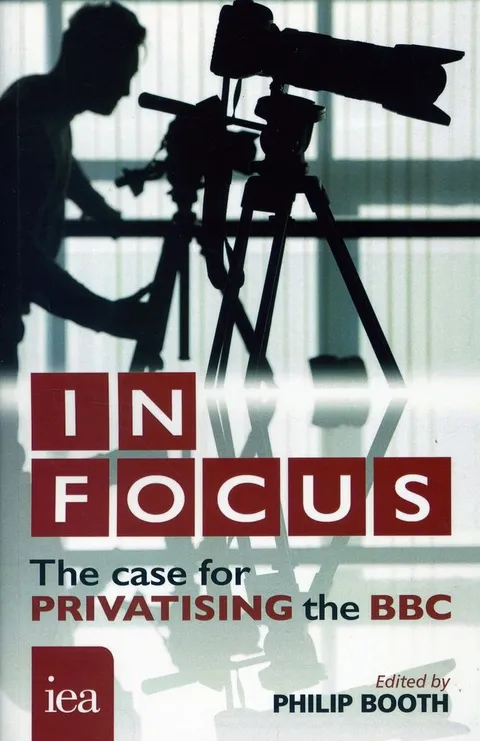
The BBC holds a special place in the world of broadcasting. It derives its funding from a compulsory levy on people who may not even use the service. The protection it receives is justified on the grounds that it contributes to national welfare because of its role in ‘public service broadcasting’. The authors of this book argue that the BBC’s funding model is becoming untenable as technology changes. Furthermore, technology has also undermined the justification for government support for public service broadcasting. There is also major concern about bias at the BBC. However, the book concludes that bias is not confined to the BBC, but is common to all media providers. The problem is not bias as such, but the link between the BBC and the government, together with the compulsory funding model which does not allow people to not fund content of which they disapprove. Various options for reform are presented, concluding with a proposal for fullblown privatisation. It is concluded that this is the only way to realise the potential of an organisation that should be international in scope and which, under the current funding model, will become marginalised by media players operating worldwide across a range of platforms. This book is essential reading for anybody involved in public policy or the economics of broadcasting.
Ryan Bourne
Ryan Bourne is Head of Public Policy at the IEA and a weekly columnist for CityAM. He has previously worked at both the Centre for Policy Studies and Frontier Economics, and has written widely on economic topics.
More by Ryan Bourne



Stephen Davies
Stephen Davies is a missionary living amongst Fulani herders in West Africa. He speaks Fulfulde, eats millet, and accompanies cattle-drives. He also write for the Guardian Weekly (Letters from Burkina Faso). Have a look at his website: www.voiceinthedesert.org.uk.
More by Stephen Davies









Why Readwise Books?
Readwise Books is an ebook & audiobook platform that automatically logs how much you and your friends read, making it fun and easy to read more. Learn more →