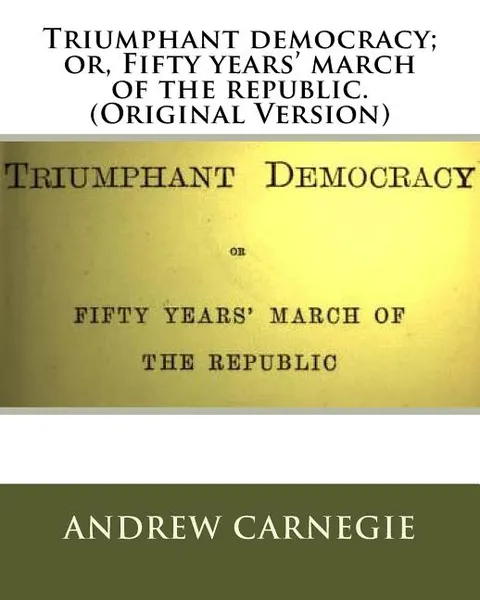
Triumphant democracy; or, Fifty years' march of the republic. (Original Version)
Report an issue
Tell us what's wrong and we'll take a look.
Thanks – we got it. We'll review and follow up if needed.
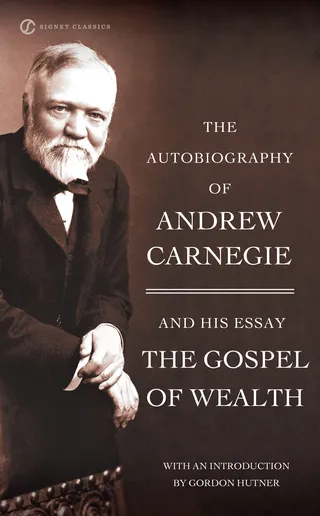
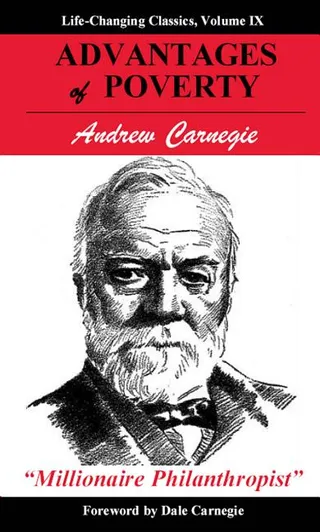
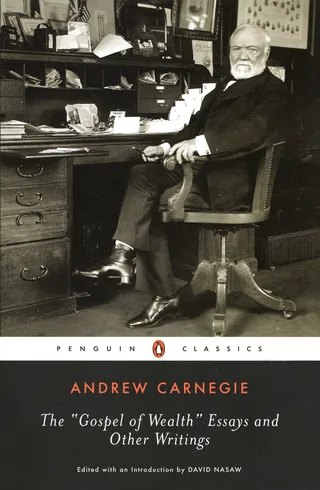
Andrew Carnegie November 25, 1835 - August 11, 1919) was a Scottish-American industrialist who led the enormous expansion of the American steel industry in the late 19th century. He is often identified as one of the richest people in history, alongside John D. Rockefeller and Jakob Fugger.[5] He built a leadership role as a philanthropist for the United States and the British Empire. During the last 18 years of his life, he gave away to charities, foundations, and universities about $350 million[6] (in 2015 share of GDP, $78.6 billion) - almost 90 percent of his fortune. His 1889 article proclaiming "The Gospel of Wealth" called on the rich to use their wealth to improve society, and it stimulated a wave of philanthropy. Carnegie was born in Dunfermline, Scotland, and emigrated to the United States with his very poor parents in 1848. Carnegie started work as a telegrapher and by the 1860s had investments in railroads, railroad sleeping cars, bridges and oil derricks. He accumulated further wealth as a bond salesman raising money for American enterprise in Europe. He built Pittsburgh's Carnegie Steel Company, which he sold to J.P. Morgan in 1901 for $480 million[6] (2015 per share of GDP, $370 billion), creating the U.S. Steel Corporation. Carnegie devoted the remainder of his life to large-scale philanthropy, with special emphasis on local libraries, world peace, education and scientific research. With the fortune he made from business, he built Carnegie Hall and he founded the Carnegie Corporation of New York,
Andrew Carnegie
Andrew Carnegie (1835-1919) was a Scottish American industrialist who led the enormous expansion of the American steel industry in the late nineteenth century. He founded Pittsburgh's Carnegie Steel Company, which was later merged with Elbert H. Gary's Federal Steel Company and several smaller companies to create U.S. Steel. With the fortune he made from business among others he built Carnegie Hall, later turning to philanthropy and interests in education, founding the Carnegie Corporation of New York, the Carnegie Endowment for International Peace, the Carnegie Institution of Washington, Carnegie Mellon University, and the Carnegie Museums of Pittsburgh. Carnegie gave most of his money to establish libraries, schools, and universities in the United States, the United Kingdom, Canada, and other countries.
More by Andrew Carnegie










Why Readwise Books?
Readwise Books is an ebook & audiobook platform that automatically logs how much you and your friends read, making it fun and easy to read more. Learn more →