Report an issue
Tell us what's wrong and we'll take a look.
Thanks – we got it. We'll review and follow up if needed.
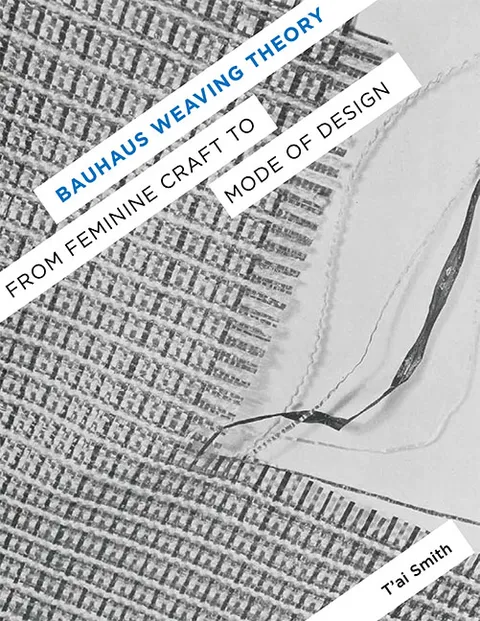
The Bauhaus school in Germany has long been understood through the writings of its founding director, Walter Gropius, and well-known artists who taught there such as Wassily Kandinsky and László Moholy-Nagy. Far less recognized are texts by women in the school's weaving workshop. In Bauhaus Weaving Theory, T'ai Smith uncovers new significance in the work the Bauhaus weavers did as writers.
From colorful, expressionist tapestries to the invention of soundproofing and light-reflective fabric, the workshop's innovative creations influenced a modernist theory of weaving. In the first careful examination of the writings of Bauhaus weavers, including Anni Albers, Gunta Stözl, and Otti Berger, Smith details how these women challenged assumptions about the feminine nature of their craft. As they harnessed the vocabulary of other disciplines like painting, architecture, and photography, Smith argues, the weavers resisted modernist thinking about distinct media. In parsing texts about tapestries and functional textiles, the vital role these women played in debates about medium in the twentieth century and a nuanced history of the Bauhaus comes to light.
Bauhaus Weaving Theory deftly reframes the Bauhaus weaving workshop as central to theoretical inquiry at the school. Putting questions of how value and legitimacy are established in the art world into dialogue with the limits of modernism, Smith confronts the belief that the crafts are manual and technical but never intellectual arts.







Why Readwise Books?
Readwise Books is an ebook & audiobook platform that automatically logs how much you and your friends read, making it fun and easy to read more. Learn more →