Report an issue
Tell us what's wrong and we'll take a look.
Thanks – we got it. We'll review and follow up if needed.
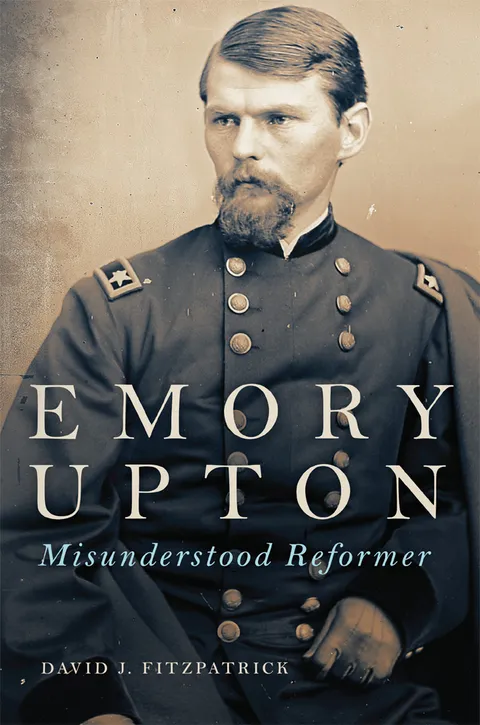
A devout Methodist farm boy from upstate New York, Upton attended the United States Military Academy at West Point and served in the Civil War. His use of a mass infantry attack to break the Confederate lines at Spotsylvania Courthouse in 1864 identified him as a rising figure in the U.S. Army. Upton's subsequent work on military organizations in Asia and Europe, commissioned by Commanding General William T. Sherman, influenced the army's turn toward a European, largely German ideal of soldiering as a profession. Yet it was this same text, along with Upton's Military Policy of the United States, that also propelled the misinterpretations of Upton--first by some contemporaries, and more recently by noted historians Stephen Ambrose and Russell Weigley. By showing Upton's dedication to the ideal of the citizen-soldier and placing him within the context of contemporary military, political, and intellectual discourse, Fitzpatrick shows how Upton's ideas clearly grew out of an American military-political tradition.
Emory Upton: Misunderstood Reformer clarifies Upton's influence on the army by offering a new and necessary understanding of the military's intellectual direction at a critical juncture in American history.
David Fitzpatrick
David Fitzpatrick was born in Dearborn, Michigan, grew up in Connecticut, graduated from Skidmore College, and earned his MFA degree from Fairfield University in 2011. He works part-time at an auto dealership and is married to a graphic designer and fellow writer, Amy Holmes. His work has been published by The New Haven Review, Barely South Review, and Fiction Weekly. He lives in Middletown, Connecticut.
More by David Fitzpatrick







Why Readwise Books?
Readwise Books is an ebook & audiobook platform that automatically logs how much you and your friends read, making it fun and easy to read more. Learn more →