Report an issue
Tell us what's wrong and we'll take a look.
Thanks – we got it. We'll review and follow up if needed.
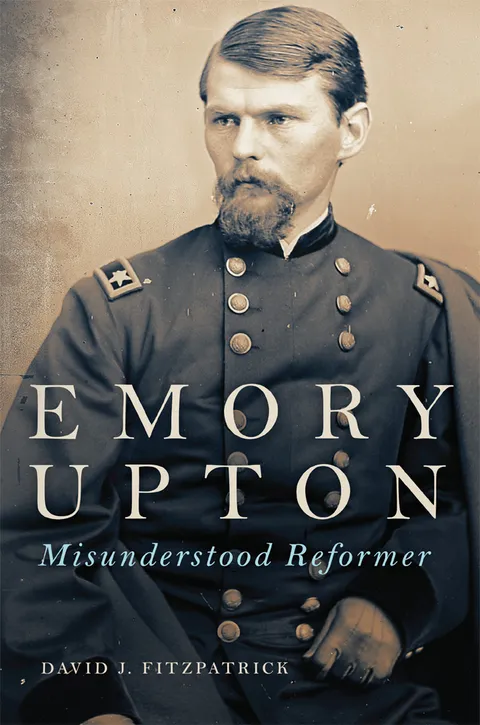
A devout Methodist farm boy from upstate New York, Upton attended the United States Military Academy at West Point and served in the Civil War. His use of a mass infantry attack to break the Confederate lines at Spotsylvania Courthouse in 1864 identified him as a rising figure in the U.S. Army. Upton's subsequent work on military organizations in Asia and Europe, commissioned by Commanding General William T. Sherman, influenced the army's turn toward a European, largely German ideal of soldiering as a profession. Yet it was this same text, along with Upton's Military Policy of the United States, that also propelled the misinterpretations of Upton--first by some contemporaries, and more recently by noted historians Stephen Ambrose and Russell Weigley. By showing Upton's dedication to the ideal of the citizen-soldier and placing him within the context of contemporary military, political, and intellectual discourse, Fitzpatrick shows how Upton's ideas clearly grew out of an American military-political tradition.
Emory Upton: Misunderstood Reformer clarifies Upton's influence on the army by offering a new and necessary understanding of the military's intellectual direction at a critical juncture in American history.






Why Readwise Books?
Readwise Books is an ebook & audiobook platform that automatically logs how much you and your friends read, making it fun and easy to read more. Learn more →