Report an issue
Tell us what's wrong and we'll take a look.
Thanks – we got it. We'll review and follow up if needed.
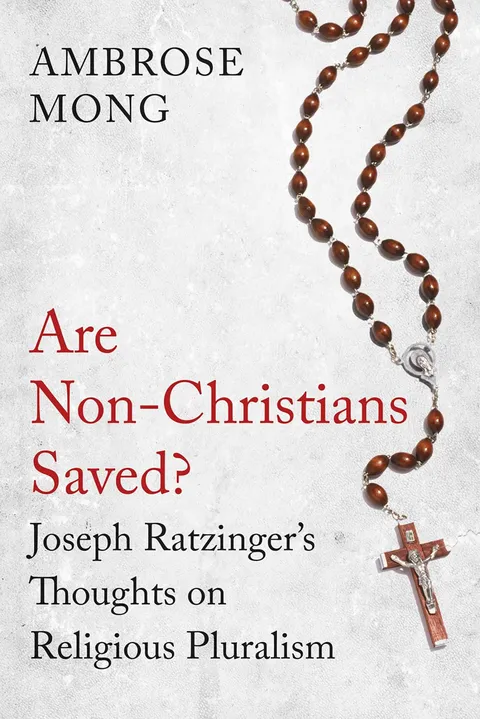
Religious pluralism upholds the idea that multiple religions can coexist and be beneficial for society; it is a concept spreading around the world, not only in Asia with its myriad beliefs and practices, but also in Europe where many non-Christian religious traditions are growing. On the face of it, religious pluralism is the ultimate message of tolerance, a vitally important principle for how we can live peacefully. But not everyone sees it this way.
Joseph Ratzinger, former Pope Benedict XVI and Prefect of the Congregation for the Doctrine of the Faith, is amongst those who regard religious pluralism as a threat to Christianity. If only Christianity can save us, then how can religious pluralism do anything but hinder Christianity’s cause? Ambrose Mong examines Ratzinger’s thoughts on this subject and evaluates how the church has responded to the call of the Second Vatican Council to create dialogues with other faiths. By looking at Ratzinger’s educational, cultural and religious background, Mong reveals the roots of Ratzinger’s Eurocentric bias and how it has shaped the views that he holds today, including his attitude towards religious pluralism, his ecclesiology and his ecumenical theology.
Are Non-Christians Saved? is essential reading for students, teachers and scholars seeking a thorough analysis of Ratzinger’s position, including why he believes religious pluralism, with its ‘evil twins’ of relativism and secularism, is a threat to Christianity.
Ambrose Mong
Ambrose Ih-Ren Mong, OP, is visiting professor at the University of Saint Joseph, Macau, and part-time lecturer at The Chinese University of Hong Kong. He holds an MA in English from the University of British Columbia, an STB from the Angelicum, Rome, and an MPhil and PhD in Religious Studies from The Chinese University of Hong Kong.
More by Ambrose Mong
















Why Readwise Books?
Readwise Books is an ebook & audiobook platform that automatically logs how much you and your friends read, making it fun and easy to read more. Learn more →