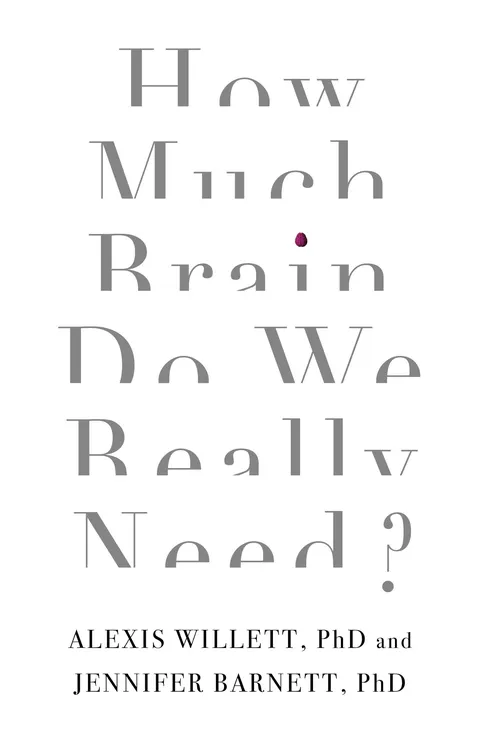
How Much Brain Do We Really Need?
Report an issue
Tell us what's wrong and we'll take a look.
Thanks – we got it. We'll review and follow up if needed.
Your brain is shrinking. Does it matter?
Rethinking the Brain challenges us to think differently. Rather than just concentrating on the many wonderful things the brain can do, this entertaining insight into its complexities and contradictions asks whether in fact we can live satisfactorily without some of it.
The bad news is that our brains start to shrink from our mid-thirties. But the good news is that we still seem to generally muddle along and our brain is able to adapt in extraordinary ways when things going wrong.
Alexis Willett and Jennifer Barnett shed light on what the human brain can do - in both optimal and suboptimal conditions - and consider what it can manage without. Through fascinating facts and figures, case studies and hypothetical scenarios, expert interviews and scientific principles, they take us on a journey from the ancient mists of time to the far reaches of the future, via different species and lands.
Is brain training the key to healthy ageing? Do women really experience 'baby brain'? Is our brain at its evolutionary peak or do we have an even more brilliant future to look forward to? We discover the answers to these questions and more.



Alexis Willett
Dr Alexis Willett is a science communicator who aims to make science accessible to all. She has a PhD in biomedical science from the University of Cambridge, where she studied at the Medical Research Council's Human Nutrition Research unit. She's taught human physiology and published on a wide range of health subjects. Alexis spends much of her time turning cutting-edge research and health policy jargon into something meaningful for the public, patients, doctors and policy makers. In her spare time, Alexis drinks a lot of rooibos tea.
Her first book, How Much Brain Do We Really Need?, with Jennifer Barnett, was published by Robinson in December 2017.
More by Alexis Willett



Why Readwise Books?
Readwise Books is an ebook & audiobook platform that automatically logs how much you and your friends read, making it fun and easy to read more. Learn more →