Fort Payne
Report an issue
Tell us what's wrong and we'll take a look.
Thanks – we got it. We'll review and follow up if needed.
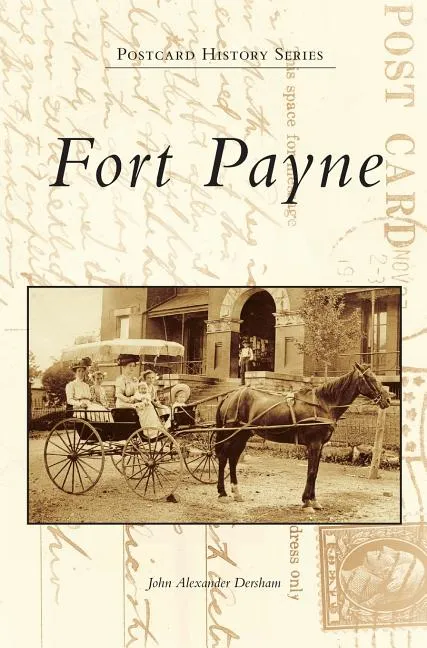
Fort Payne was named for the US Army stockade at the Native American village of Willstown, where Cherokee scholar Sequoyah developed his famous alphabet in the 1820s. Following the Cherokee Removal of 1838, known as the Trail of Tears, a farming settlement developed around the stockade site, and the arrival of the Wills Valley Railroad in the 1850s helped shape its early growth. The small town became the county seat in 1878 and quickly boomed into a coal and iron industrial powerhouse filled with the municipal infrastructure, stately structures, and elegant residences that define the city today. By mid-century, Fort Payne was experiencing its second boom and was ultimately recognized as the "Sock Capital of the World."
John Alexander Dersham
JOHN ALEXANDER DERSHAM'S photography career began on November 1, 1960, when he took his first pictures with his father's 1930 Kodak Brownie. From that modest start, his art has continued without pause for fifty-nine years. Meanwhile, Dersham made a career in the photography industry, serving in management at Eastman Kodak and its subsidiaries in multiple states for more than thirty years. His last Kodak job brought him to Alabama, where he fell in love with the state's natural beauty and varied terrain, as well as its people and places. Dersham's affinity for Alabama inspired his first published collection of photographs entitled My Alabama: John Dersham Photographs a State. He and his wife, Kyle, live on Lookout Mountain near Fort Payne in northeast Alabama. They have two children and two grandchildren.


Why Readwise Books?
Readwise Books is an ebook & audiobook platform that automatically logs how much you and your friends read, making it fun and easy to read more. Learn more →