Report an issue
Tell us what's wrong and we'll take a look.
Thanks – we got it. We'll review and follow up if needed.
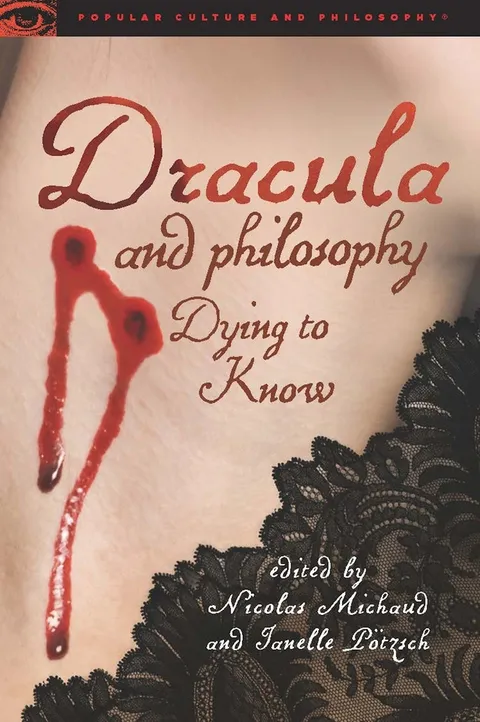
John C. Altmann decides whether Dracula can really be blamed for his crimes, since it's his nature as a vampire to behave a certain way. Robert Arp argues that Dracula's addiction to live human blood dooms him to perpetual frustration and misery. John V. Karavitis sees Dracula as a Randian individual pitted against the Marxist collective. Greg Littmann maintains that if we disapprove of Dracula's behavior, we ought to be vegetarians. James Edwin Mahon uses the example of Dracula to resolve nagging problems about the desirability of immortality. Adam Barkman and Michael Versteeg ponder what it would really feel like to be Dracula, and thereby shed some light on the nature of consciousness. Robert Vuckovich looks at the sexual morality of Dracula and other characters in the Dracula saga. Ariane de Waal explains that "Dragula" is scary because every time this being appears, it causes "gender trouble." And Cari Callis demonstrates that the Count is really the Jungian Shadow archetype -- with added Shapeshifter elements -- in the journey of Mina Harker, heroine/victim of Stoker's novel, from silly girl to empowered woman.
Nicolas Michaud
Nicolas Michaud is an instructor of philosophy at the University of North Florida and has contributed to Twilight and Philosophy, Final Fantasy and Philosophy, 30 Rock and Philosophy, and Green Lantern and Philosophy.


Why Readwise Books?
Readwise Books is an ebook & audiobook platform that automatically logs how much you and your friends read, making it fun and easy to read more. Learn more →