
Report an issue
Tell us what's wrong and we'll take a look.
Thanks – we got it. We'll review and follow up if needed.
Digital objects, in their simplest form, are data. They are also a new kind of industrial object that pervades every aspect of our life today--as online videos, images, text files, e-mails, blog posts, Facebook events.Yet, despite their ubiquity, the nature of digital objects remains unclear.
On the Existence of Digital Objects conducts a philosophical examination of digital objects and their organizing schema by creating a dialogue between Martin Heidegger and Gilbert Simondon, which Yuk Hui contextualizes within the history of computing. How can digital objects be understood according to individualization and individuation? Hui pursues this question through the history of ontology and the study of markup languages and Web ontologies; he investigates the existential structure of digital objects within their systems and milieux. With this relational approach toward digital objects and technical systems, the book addresses alienation, described by Simondon as the consequence of mistakenly viewing technics in opposition to culture.
Interdisciplinary in philosophical and technical insights, with close readings of Husserl, Heidegger, and Simondon as well as the history of computing and the Web, Hui's work develops an original, productive way of thinking about the data and metadata that increasingly define our world.
Yuk Hui
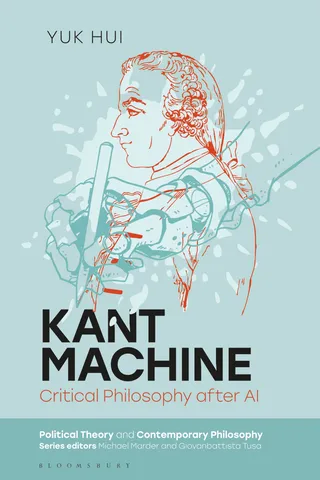
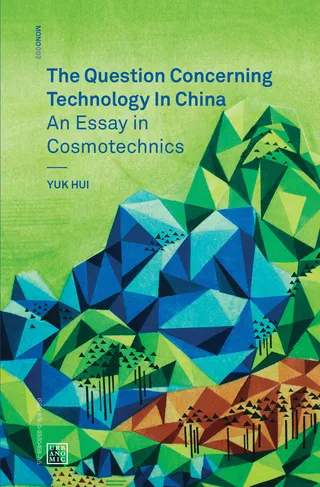
Yuk Hui is Professor of Philosophy at Erasmus University Rotterdam, where he holds the Chair of Human Conditions and directs the Erasmus Institute for Philosophy and Technology. He wrote his doctoral dissertation under Bernard Stiegler at Goldsmiths, University of London, and completed his habilitation in philosophy at Leuphana University Lüneburg. His books include On the Existence of Digital Objects (2016), The Question Concerning Technology in China: An Essay in Cosmotechnics (2016), Recursivity and Contingency (2019), Art and Cosmotechnics (2021), Post-Europe (2024), Machine and Sovereignty (2024) and Kant Machine (2026). He has convened the Research Network for Philosophy and Technology since 2014 and has served as a juror for the Berggruen Prize for Philosophy and Culture since 2020.
More by Yuk Hui





Why Readwise Books?
Readwise Books is an ebook & audiobook platform that automatically logs how much you and your friends read, making it fun and easy to read more. Learn more →