
Report an issue
Tell us what's wrong and we'll take a look.
Thanks – we got it. We'll review and follow up if needed.
The history of early Australian science fiction has been well chronicled by literary historians. In searching for a synthesis of colonial Australian science fiction, they generally identify three genres into which most Australian science fiction of the period can be placed: lost civilisation novels, (including Lemurian and utopian novels); historical fantasies, which re-imagined Australia's colonial past (particularly the history of Australian exploration); and future invasion or future political novels (which dramatized fears of racial invasion or social chaos resulting from political upheaval or natural disasters like plague).
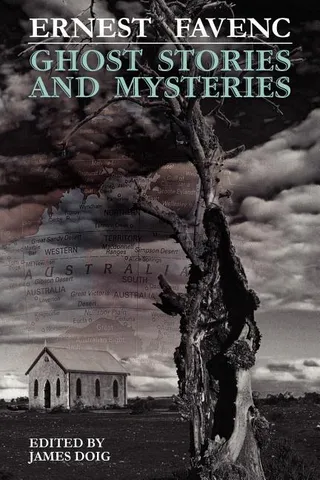
In the short form, early Australian science fiction is more heterogeneous. There were more outlets for the short form and more short stories were published, so we would expect a wider range of themes and subject matter, and indeed this is the case. The stories collected here indicate something of the richness and variety of science fiction written by Australian authors up the mid-1930s. We see some of the themes mentioned above, for example the lost civilisation story (Phil Collas's "The Inner Domain") and the future invasion story (Ernest Favenc's "What the Rats Brought"), but they offer something new and original, while other stories are built on the consequences of technological discoveries or advancements, for example Ernest Favenc's "The Land of the Unseen," H.B. Marriott Watson's "The Instrument," and Beatrice Grimshaw's "Lost Wings."
Ernest Favenc
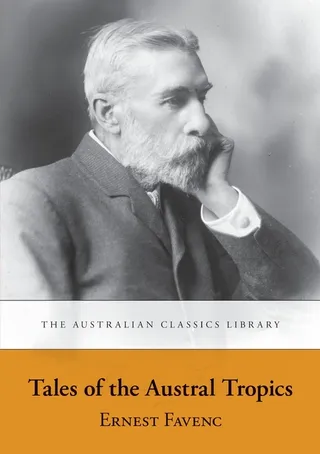
Australian author, adventurer, and journalist Ernest Favenc (1845-1908) made a significant impact on the growth of Australian literature in the late 19th century. Favenc, who was born in England but later emigrated to Australia as a young man, was a surveyor, explorer, and journalist. His time spent in the Australian bush gave him a profound understanding of the difficulties and untamed beauty of the outback, which is evident in his work. Favenc's writing was renowned for its compassion and nuance, and it frequently examined the complicated interactions between colonizers and indigenous Australians. His works, such as "Marooned on Australia," were well-liked by readers and contributed to the development of the Australian adventure fiction subgenre. Favenc was a well-known explorer and surveyor in addition to being a writer, and he undertook multiple journeys into the interior of Australia. His knowledge of geology and mining also allowed him to work in South Africa and Fiji, among other places.
More by Ernest Favenc


Why Readwise Books?
Readwise Books is an ebook & audiobook platform that automatically logs how much you and your friends read, making it fun and easy to read more. Learn more →