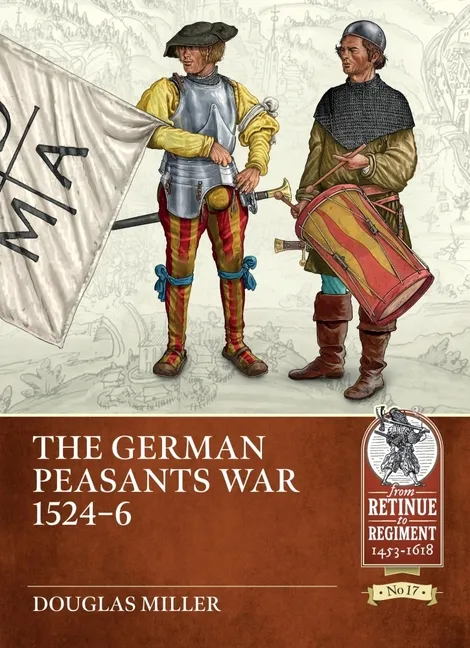
The German Peasants War 1524-6
Report an issue
Tell us what's wrong and we'll take a look.
Thanks – we got it. We'll review and follow up if needed.
The events which occurred within the German speaking part of the Holy Roman Empire between 1524 and 1526 have been described by historians as the most significant popular uprising on European soil of the early modern era. They took place against the backdrop of massive political, economic, technological, and cultural upheaval and a 'Reformation' of religious worship and belief. These developments had a profound effect on the methods of warfare as the mounted fully armored knight with retinue gave way to the use of squadrons of light horse, the deployment of massed ranks of pike and the continuing development of field artillery and the science of ballistics. This book, which is a companion volume to the Army of the Swabian League in this series, provides a detailed and illustrated account of the organization and operation of the peasant armies of the day. It presents a description and analysis of the rebels' tactics and weaponry used against the Landsknecht armies of the German nobility in each of the theaters of this war and it seeks to provide a more holistic explanation for the ultimate collapse of this 'revolution of the common man.'
Douglas K Miller
A professor of history at Oklahoma State University and a former working musician, Douglas Miller specializes in twentieth-century Native American history. He is the author of Indians on the Move: Native American Mobility and Urbanization in the Twentieth Century. He lives in Stillwater, Oklahoma.
More by Douglas K Miller








Why Readwise Books?
Readwise Books is an ebook & audiobook platform that automatically logs how much you and your friends read, making it fun and easy to read more. Learn more →