Report an issue
Tell us what's wrong and we'll take a look.
Thanks – we got it. We'll review and follow up if needed.
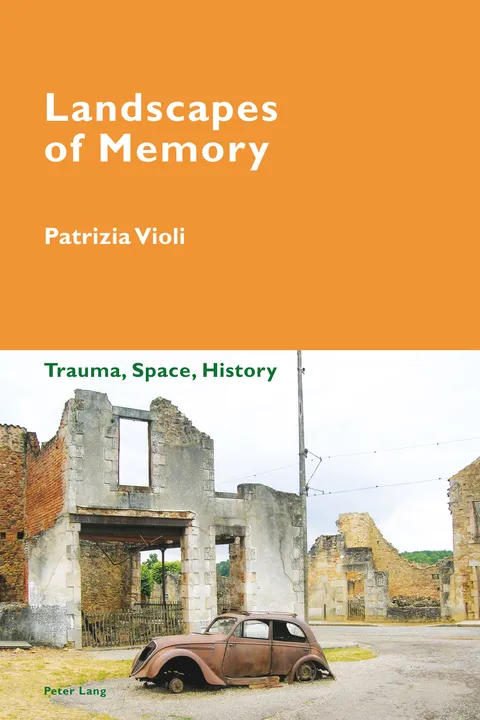
Since Auschwitz, and more and more frequently today, places that were theatres of mass suffering and other atrocities are becoming common features of our cultural landscape. What should we do with these places? Keep them as they were, to remind us of what actually took place there, as ideal museums of past evils? Or should we transform them and, if so, into which forms and according to which principles? Which pasts do these places transmit, and how? This volume uses an innovative semiotic methodology to analyse selected key trauma sites. The author demonstrates that these places can become, once properly interrogated, privileged observatories capable of throwing light upon the many different conflicts, forms of social control, and power relationships that underlie any politics of memory. The selfsame notions of trauma and memory become, in this way, rewritten in quite a different light: far from any kind of naturalistic definition, they emerge as painful «knots» within which many of the most crucial questions in the contemporary world are intertwined.
Patrizia Violi
Patrizia Violi is an Alma Mater Professor at the University of Bologna and the founder of 'TraMe - Centre for the Semiotic Study of Memory' at the same university. She was director of the 'Centro Internazionale di Studi Umberto Eco' and PI of various European funded projects on trauma and urban space. She has published internationally on the relationship between trauma and memory, with a specific focus on Chile, Argentina and Colombia. Her latest publications include Landscapes of Memory: Trauma, Space, History (2017), and Reading Memory Sites Through Signs: Hiding into Landscape (2023).


Why Readwise Books?
Readwise Books is an ebook & audiobook platform that automatically logs how much you and your friends read, making it fun and easy to read more. Learn more →