Report an issue
Tell us what's wrong and we'll take a look.
Thanks – we got it. We'll review and follow up if needed.
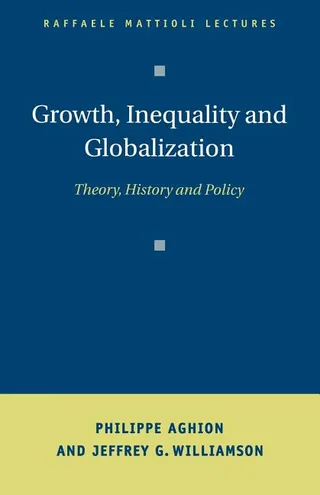
The book takes the form of a dialogue between an applied theorist calling on "Schumpeterian growth" models and a microeconometrician employing new techniques to gauge competition and entry. In each chapter, theoretical models are systematically confronted with empirical data, which either invalidates the models or suggests changes in the modeling strategy. Aghion and Griffith note a fundamental divorce between theorists and empiricists who previously worked on these questions. On one hand, existing models in industrial organization or new growth economics all predict a negative effect of competition on innovation and growth: namely, that competition is bad for growth because it reduces the monopoly rents that reward successful innovators. On the other hand, common wisdom and recent empirical studies point to a positive effect of competition on productivity growth. To reconcile theory and evidence, the authors distinguish between pre- and post-innovation rents, and propose that innovation may be a way to escape competition, an idea that they confront with microeconomic data. The book's detailed analysis should aid scholars and policy makers in understanding how the benefits of tougher competition can be achieved while at the same time mitigating the negative effects competition and imitation may have on some sectors or industries.
Philippe Aghion
Philippe Aghion is professor at the College de France, INSEAD, and the London School of Economics and was previously professor of economics at Harvard. He is coauthor, with Peter Howitt, of Endogenous Growth Theory and The Economics of Growth.
More by Philippe Aghion



Why Readwise Books?
Readwise Books is an ebook & audiobook platform that automatically logs how much you and your friends read, making it fun and easy to read more. Learn more →