Report an issue
Tell us what's wrong and we'll take a look.
Thanks – we got it. We'll review and follow up if needed.
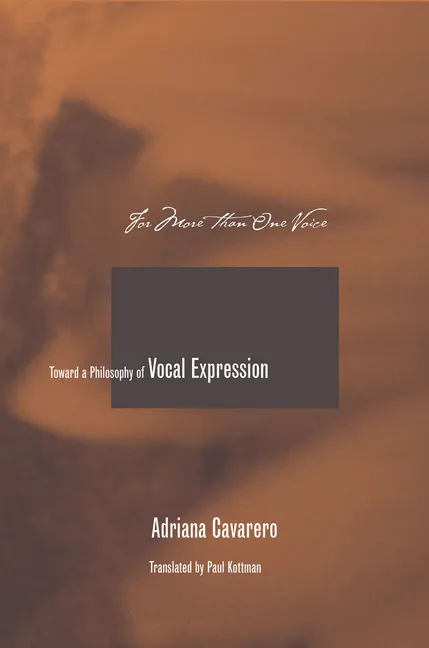
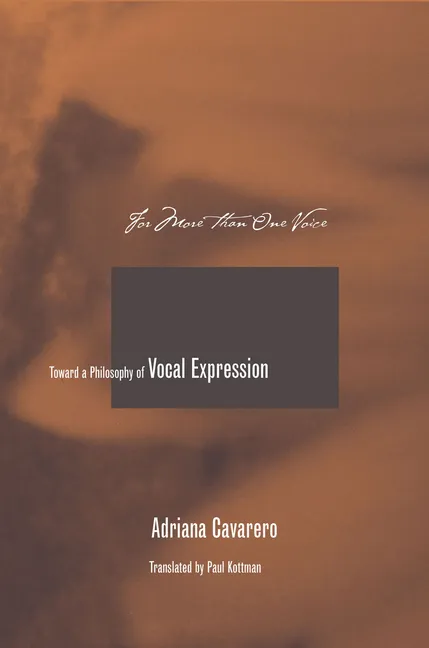
The human voice does not deceive. The one who is speaking is inevitably revealed by the singular sound of her voice, no matter "what" she says. We take this fact for granted--for example, every time someone asks, over the telephone, "Who is speaking?" and receives as a reply the familiar utterance, "It's me." Starting from the given uniqueness of every voice, Cavarero rereads the history of philosophy through its peculiar evasion of this embodied uniqueness. She shows how this history--along with the fields it comprehends, such as linguistics, musicology, political theory, and studies in orality--might be grasped as the "devocalization of Logos," as the invariable privileging of semantike over phone, mind over body. Female figures--from the Sirens to the Muses, from Echo to opera singers--provide a crucial counterhistory, one in which the embodied voice triumphs over the immaterial semantic. Reconstructing this counterhistory, Cavarero proposes a "politics of the voice" wherein the ancient bond between Logos and politics is reconfigured, and wherein what matters is not the communicative content of a given discourse, but rather who is speaking.
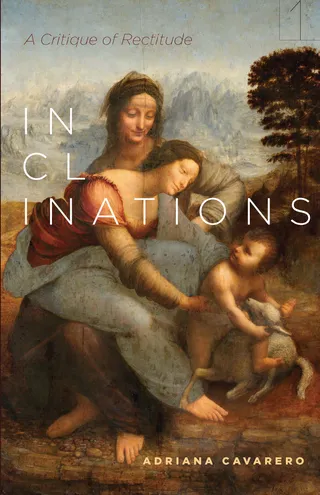






Paul A Kottman
Translated by
Paul Kottman is Associate Professor of Comparative Literature at the New School for Social Research. He is the author of Love as Human Freedom (forthcoming), Tragic Conditions in Shakespeare: Disinheriting the Globe, and A Politics of the Scene.


Why Readwise Books?
Readwise Books is an ebook & audiobook platform that automatically logs how much you and your friends read, making it fun and easy to read more. Learn more →