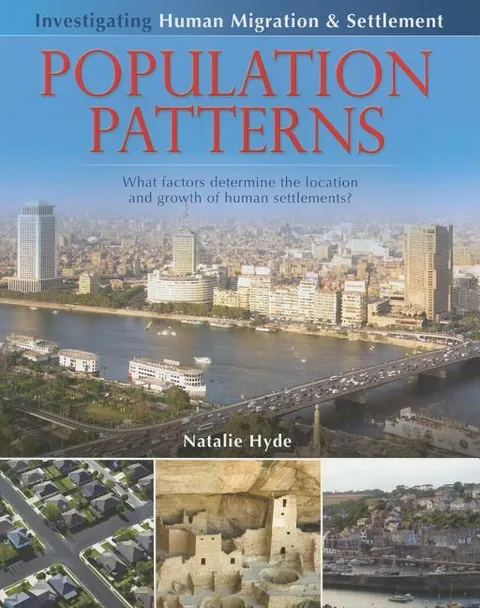
Population Patterns: What Factors Determine the Location and Growth of Human Settlements?
Report an issue
Tell us what's wrong and we'll take a look.
Thanks – we got it. We'll review and follow up if needed.
Why do people migrate to and settle in the places they do? Fascinating examples in history help explain how the earliest human settlements were situated close to fertile ground and rivers for farming and raising livestock. Other determining factors have included areas that offered defensive advantages, resources such as metals, salt, and fossil fuels, and locations on trading routes. In modern times proximity to commercial centers and transportion links, such as railways, canals, and airports, have become more important. Examples featured include settling the Nile in ancient Egypt; the shaping of Central America by trade and colonization; the Industrial Revolution in Britain; the opening up of the American West; the Gold Rush; and the colonization of Australia. The concepts of urbanization - the settlement and growth of cities - and suburbanization, the return to the countryside and the growth of commuter towns, are both examined.
Natalie Hyde
Natalie Hyde is the author of bestselling novels Saving Armpit, I Owe You One, and Hockey Girl. Her numerous non-fiction books include Cryptic Canada and Glow-in-the-Dark Creatures. She lives with her family in southwestern Ontario.
More by Natalie Hyde













Why Readwise Books?
Readwise Books is an ebook & audiobook platform that automatically logs how much you and your friends read, making it fun and easy to read more. Learn more →