Report an issue
Tell us what's wrong and we'll take a look.
Thanks – we got it. We'll review and follow up if needed.
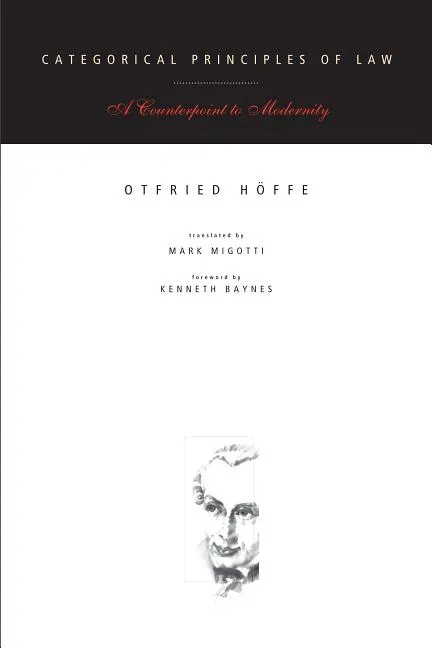
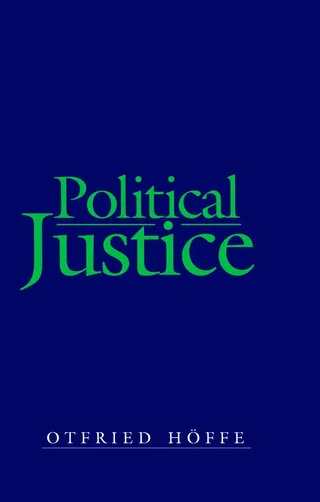
In Germany, Otfried Höffe has been a leading contributor to debates in moral, legal, political, and social philosophy for close to three decades. Höffe's work (like that of his contemporary, Jürgen Habermas), brings into relief the relevance of these German discussions to their counterparts in English-language circles.
In this book, originally published in Germany in 1990 and expanded since, Höffe proposes an extended and original interpretation of Kant' philosophy of law, and social morality. Höffe articulates his reading of Kant in the context of an account of modernity as a "polyphonous project," in which the dominant themes of pluralism and empiricism are countered by the theme of categorically binding moral principles, such as human rights. Paying equal attention to the nuances of Kant's texts and the character of the philosophical issues in their own right, Höffe ends up with a Kantianism that requires, rather than precludes, a moral anthropology and that questions the fashionable juxtaposition of Kant and Aristotle as exemplars of incompatible approaches to ethical and political thought.


Mark Migotti
Translated by
Mark Migotti is Professor of Philosophy at the University of Calgary.


Why Readwise Books?
Readwise Books is an ebook & audiobook platform that automatically logs how much you and your friends read, making it fun and easy to read more. Learn more →