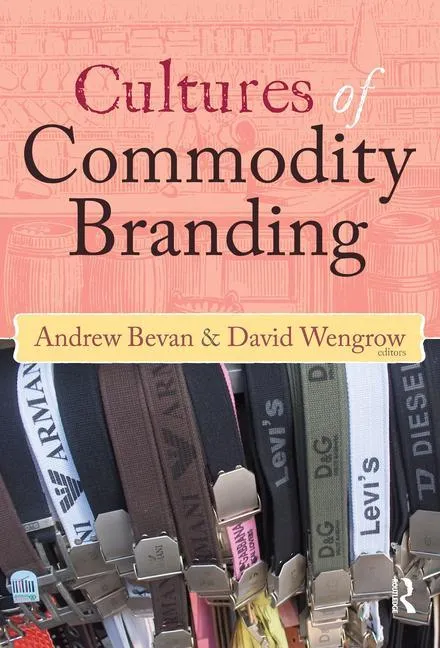
Cultures of Commodity Branding
Report an issue
Tell us what's wrong and we'll take a look.
Thanks – we got it. We'll review and follow up if needed.
Commodity branding did not emerge with contemporary global capitalism. In fact, the authors of this volume show that the cultural history of branding stretches back to the beginnings of urban life in the ancient Near East and Egypt, and can be found in various permutations in places as diverse as the Bronze Age Mediterranean and Early Modern Europe. What the contributions in this volume also vividly document, both in past social contexts and recent ones as diverse as the kingdoms of Cameroon, Socialist Hungary or online eBay auctions, is the need to understand branded commodities as part of a broader continuum with techniques of gift-giving, ritual, and sacrifice. Bringing together the work of cultural anthropologists and archaeologists, this volume obliges specialists in marketing and economics to reassess the relationship between branding and capitalism, as well as adding an important new concept to the work of economic anthropologists and archaeologists.
David Wengrow
David Wengrow is Professor of Comparative Archaeology at the Institute of Archaeology, University College London and has been a visiting professor at New York University. He is the author of What Makes Civilization? and other books, and co-author with David Graeber of the New York Times bestseller The Dawn of Everything: A New History of Humanity. Wengrow has conducted archaeological fieldwork in Africa and the Middle East, and contributed op-eds to The Guardian and The New York Times.


Why Readwise Books?
Readwise Books is an ebook & audiobook platform that automatically logs how much you and your friends read, making it fun and easy to read more. Learn more →