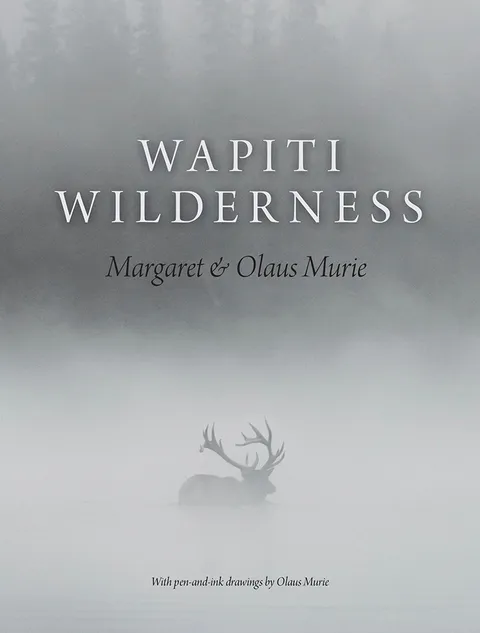
Wapiti Wilderness
Report an issue
Tell us what's wrong and we'll take a look.
Thanks – we got it. We'll review and follow up if needed.
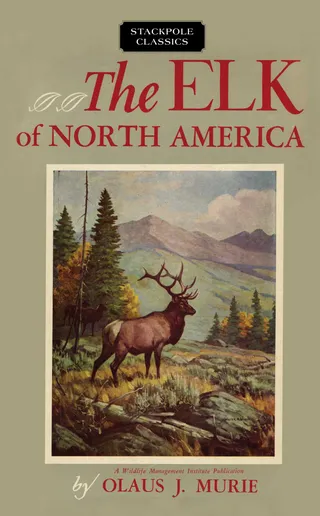
For over 37 years, Margaret and Olaus Murie made their home in the mountainous wilderness of the Tetons, where Olaus Murie conducted his famous studies of the American elk: the wapiti. Through these years their home was almost a nature-conservation shrine to thousands of Americans interested in outdoors, animals, and nature. Wapiti Wilderness, begun by Mrs. Murie as a sequel to her book Two in the Far North, which told of the Muries' life and expeditions in Alaska, became a collaborative effort by both the Muries.
In alternate chapters, Olaus tells of his work as a field biologist for the old U.S. Bureau of Biological Survey and recounts stories of his studies of not only elk but also other great animals. And Mrs. Murie, from her side, describes their life together on the trail and in the various camps and nature adventures in that wilderness during all four seasons. The book is replete with stories of Jackson Hole residents, "pioneer poets," and the wild creatures that made their way into the Murie household. Olaus Murie's evocative pen-and-ink drawings illuminate each chapter, and four pages of photographs help complete the picture of what life was like in the wapiti wilderness.
Margaret Murie
Born in Seattle, Washington, in 1902, Margaret E. Murie was a naturalist, conservationist, and author who has been called the "grandmother of the conservation movement" for her efforts in helping establish the Arctic National Wildlife Refuge in Alaska. She received several awards for her conservation work, including the Audubon Medal, the John Muir Award, and the Robert Marshall Conservational Award. In 1998 she received the Presidential Medal of Freedom from President Clinton, and in 2002 the J.N. Ding Darling Conservationist of the Year Award. Murie was also made an Honorary Park Ranger by the National Parks Service for her passion and commitment to preserving the natural world and wildlife. She died at her home in Moose, Wyoming, in 2003 at the age of 101.
More by Margaret Murie
Olaus Murie
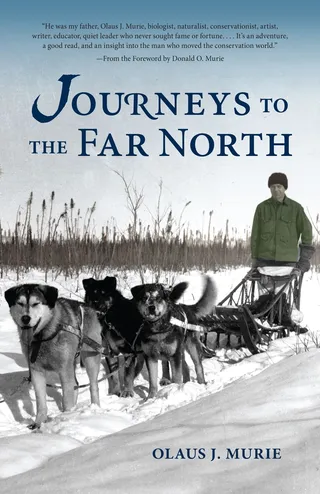
The son of Norwegian immigrants, Olaus J. Murie was born in 1889 in Moorhead, Minnesota. Early in his career he was a field naturalist for the Carnegie Museum, and made two expeditions for them into the Hudson Bay country that are described in JOURNEYS TO THE FAR NORTH. He later worked for the US Biological Survey (now the Fish and Wildlife Service) and became an Arctic field researcher in the Brooks Range of Alaska. In 1927, he moved with his wife, Mardy, to Jackson Hole, Wyoming, to investigate the largest elk herd in North America. After completing this research project, Murie accepted a position as the first president of the Wilderness Society in 1945. In the final years of his life, Murie worked closely with his wife to protect the pristine Brooks Range and the Sheenjek River Valley. Their hard work and dedication played a major role in the establishment of the Arctic National Wildlife Refuge, the most gratifying achievement in his long and storied career as a naturalist, explorer, writer, and artist. Murie was one of the pioneers of wilderness conservation in America, and he received numerous awards including the Audubon Award, the Sierra Club's John Muir Award, the Wildlife Society's Aldo Leopold Memorial Award for outstanding publication, and a Fulbright Fellowship.
More by Olaus Murie


Why Readwise Books?
Readwise Books is an ebook & audiobook platform that automatically logs how much you and your friends read, making it fun and easy to read more. Learn more →