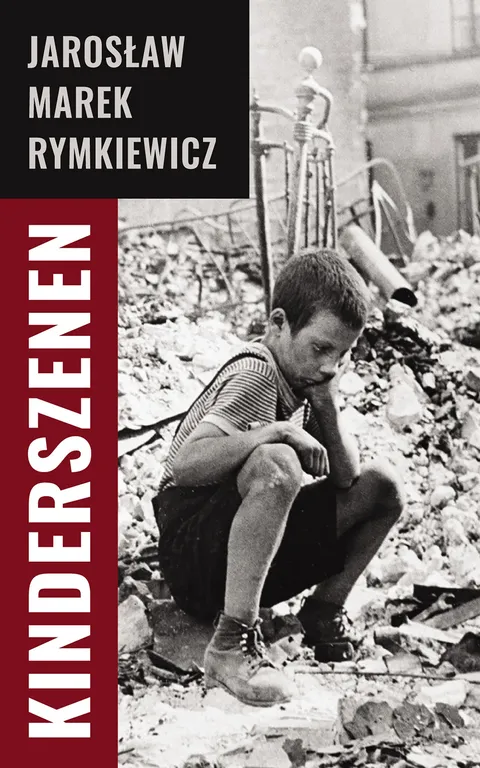
Kinderszenen
Report an issue
Tell us what's wrong and we'll take a look.
Thanks – we got it. We'll review and follow up if needed.
The book’s title comes from the suite of piano pieces by Robert Schumann which evoke the innocence and joy of childhood—thus providing a wrenching counterpoint to the violence, destruction, and madness that characterize Jarosław Marek Rymkiewicz’s coming of age.
While the scenes of his youth are depicted in vivid detail, from his boyish encounters with cats, horses, and turtles up to the shocking brutality of murder and mayhem witnessed at first hand, what really sets Kinderszenen apart is its extended meditation on the nature of war, oppression, and fanatical nationalism, and the possibility—however doomed it may seem—of human resistance to those forces. Here is an enduring testimony that remains starkly relevant to our own time.
Jaroslaw Rymkiewicz
Rymkiewicz was born in Warsaw in 1935. He is a critic and historian of literature, an essayist, poet, playwright and translator (mainly of British and American poets including T.S. Eliot, W.H. Auden and Wallace Stevens, and of Spanish poets including Lorca and Calderon). He read Polish philology at Lódz University and is now a professor at the PAN Institute for Literary Research in Warsaw. He is co-author of an encyclopaedia on the life and works of Adam Mickiewicz. He lives in Warsaw. He was winner of the Nike 2003 Award (the biggest Polish literary aword).
Rymkiewicz is a representative and theoretician of neo-classicism in Polish literature, the artistic trend associated with the broad concept of ancient tradition as continued in modern art. He has expounded his approach to poetry in works including a collection of essays published in 1967, entitled "What is Classicism?". At the heart of his work lies a belief in the harmony and continuity of art and culture (the coexistence of ancient and modern works): he uses the archetypes, traditional themes and myths of Mediterranean culture as a source of inspiration. He distorts the romantic imagination, romantic myths and stereotypes, except for two volumes published in the 1980s, in which he refers directly to the romantic tradition of patriotic verse. Yet a fundamental source of inspiration for Rymkiewicz is the baroque, especially the metaphysical and devotional poetry of the period, culminating in the work of Father Józef Baka. Rymkiewicz is interested in the spiritual side of life, especially in its posthumous, "other-worldly" dimension, which explains the recurring motifs of the macabre and of evil spirits in his works, treated with unusual sobriety and not without humour. Death and decay are the thema regium, "the royal theme", to which Rymkiewicz devotes endless variations and counterpoints. Another ubiquitous theme in his work is music, regarded as a matchless ideal, the closest thing to the world of pure essences. The poet often holds a dialogue with philosophical tradition, where his favourite "adversary" is Edmund Husserl. The trademark structure of Rymkiewicz's poetry is the thirteen-syllable rhyming couplet, the favourite form of the poets of the Polish baroque, as well as Adam Mickiewicz. In his prose Rymkiewicz describes the mood of Polish intellectuals in the period following martial law ("Polish Conversations"), and also the exceptionally dramatic incident of the liquidation of the Warsaw ghetto during the Second World War ("Umschlagplatz"). His cycle entitled "Like mythical cranes..." (of which the first volume is "Zmut") reads like a fascinating novel, dedicated to Adam Mickiewicz and Wilno (now Vilnius) and its inhabitants in the nineteenth century. "And so my historical question goes like this: does history shape a man, or is it historical circumstances that decide who he is and what he leaves behind him? Or, on the contrary, does he, regardless of history and what it does to him, produce out of himself exactly what he is bound to?" Also highly interesting are his books of essays and narrative on the lives of Juliusz Slowacki and Aleksander Fredro, especially his extremely specific "encyclopaedia", which is an exhaustive compendium of the life and work of Boleslaw Lesmian, combining academic insight with a very personal approach and arousing plenty of controversy.


Why Readwise Books?
Readwise Books is an ebook & audiobook platform that automatically logs how much you and your friends read, making it fun and easy to read more. Learn more →