Report an issue
Tell us what's wrong and we'll take a look.
Thanks – we got it. We'll review and follow up if needed.
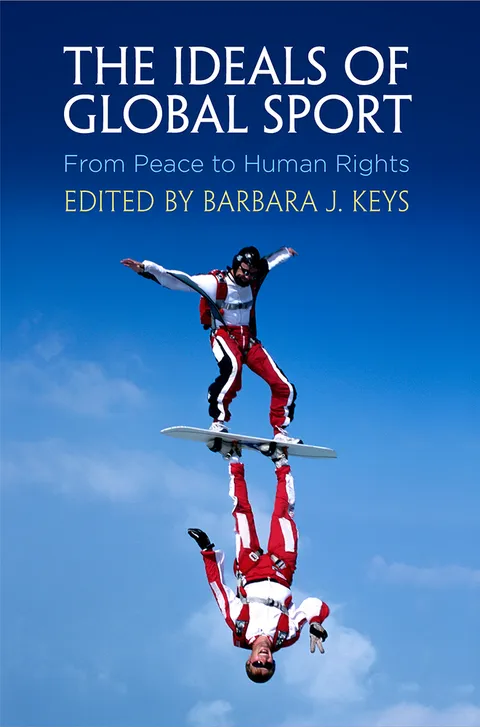
"Sport has the power to change the world," South African president Nelson Mandela told the Sporting Club in Monte Carlo in 2000. Today, we are inundated with similar claims—from politicians, diplomats, intellectuals, journalists, athletes, and fans—about the many ways that international sports competitions make the world a better place. Promoters of the Olympic Games and similar global sports events have spent more than a century telling us that these festivals offer a multitude of "goods": that they foster friendship and mutual understanding among peoples and nations, promote peace, combat racism, and spread democracy. In recent years boosters have suggested that sports mega-events can advance environmental protection in a world threatened by climate change, stimulate economic growth and reduce poverty in developing nations, and promote human rights in repressive countries. If the claims are to be believed, sport is the most powerful and effective form of idealistic internationalism on the planet.
The Ideals of Global Sport investigates these grandiose claims, peeling away the hype to reveal the reality: that shockingly little evidence underpins these endlessly repeated assertions. The essays, written by scholars from many regions and disciplines and drawn from an exceptionally diverse array of sources, show that these bold claims were sometimes cleverly leveraged by activist groups to pressure sports bodies into supporting moral causes. But the essays methodically debunk sports organizations' inflated proclamations about the record of their contributions to peace, mutual understanding, antiracism, and democracy.
Exposing enduring shortcomings in the newer realm of human rights protection, from the 1980 Moscow Olympic Games to Brazil's 2014 World Cup and the 2016 Rio Olympics, The Ideals of Global Sport suggests that sport's idealistic pretensions can have distinctly non-idealistic side effects, distracting from the staggering financial costs of hosting the events, serving corporate interests, and aiding the spread of neoliberal globalization.
Contributors: Jules Boykoff, Susan Brownell, Roland Burke, Simon Creak, Dmitry Dubrovsky, Joon Seok Hong, Barbara J. Keys, Renate Nagamine, João Roriz, Robert Skinner.
Barbara J. Keys
Barbara Keys is a historian of US foreign policy, diplomacy, and human rights. She is Professor of History at Durham University and received her PhD from Harvard University. The author or editor of several prize-winning books, including Reclaiming American Virtue: The Human Rights Revolution of the 1970s, she is a past president of the Society for Historians of American Foreign Relations.


Why Readwise Books?
Readwise Books is an ebook & audiobook platform that automatically logs how much you and your friends read, making it fun and easy to read more. Learn more →