Report an issue
Tell us what's wrong and we'll take a look.
Thanks – we got it. We'll review and follow up if needed.
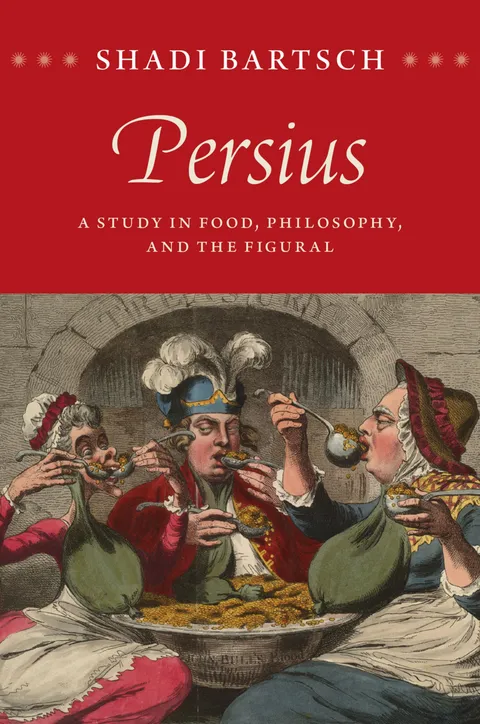
The Roman poet and satirist Persius (34–62 CE) was unique among his peers for lampooning literary and social conventions from a distinctly Stoic point of view. A curious amalgam of mocking wit and philosophy, his Satires are rife with violent metaphors and unpleasant imagery and show little concern for the reader's enjoyment or understanding. In Persius, Shadi Bartsch explores this Stoic framework and argues that Persius sets his own bizarre metaphors of food, digestion, and sexuality against more appealing imagery to show that the latter—and the poetry containing it—harms rather than helps its audience. Ultimately, he encourages us to abandon metaphor altogether in favor of the non-emotive abstract truths of Stoic philosophy, to live in a world where neither alluring poetry, nor rich food, nor sexual charm play a role in philosophical teaching.
Shadi Bartsch
Shadi Bartsch is Helen A. Regenstein Distinguished Service Professor of Classics at the University of Chicago. She is the author of Decoding the Ancient Novel: The Reader and the Role of Description in Heliodorus and Achilles Tatius (1989); Actors in the Audience: Theatricality and Doublespeak from Nero to Hadrian (1994); Ideology in Cold Blood: A Reading of Lucan's Civil War (1998); The Mirror of the Self: Sexuality, Self-Knowledge, and the Gaze in the Early Roman Empire (2006); and the forthcoming Persius: A Study in Food, Philosophy, and the Figural.
More by Shadi Bartsch





Why Readwise Books?
Readwise Books is an ebook & audiobook platform that automatically logs how much you and your friends read, making it fun and easy to read more. Learn more →