Report an issue
Tell us what's wrong and we'll take a look.
Thanks – we got it. We'll review and follow up if needed.
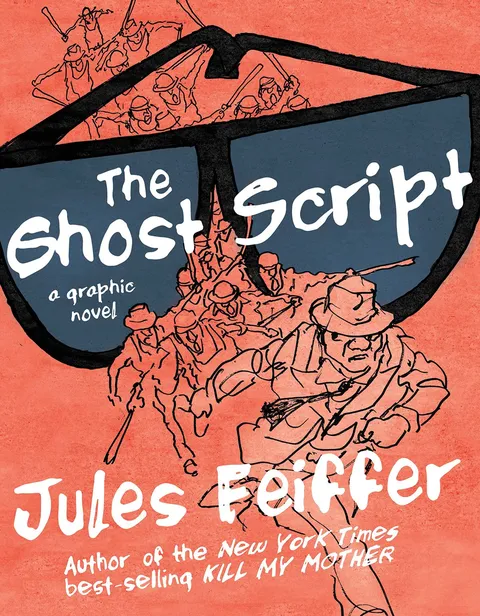
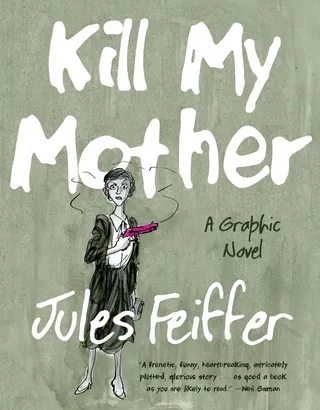
Never has the incomparable Jules Feiffer been more eerily prophetic than in this stunning finale to his best-selling Kill My Mother trilogy.
Hollywood is haunted. 1953. Ghosts abound. In particular, the ghost of Detective Sam Hannigan—murdered in Bay City twenty-two years earlier by Addie Perl, the hired assassin who then bought a Hollywood nightclub with her blood money. Among the nightclub’s favored clientele is Sam’s widow, Elsie. Blinded by a Japanese bullet while on a USO tour in the South Pacific, Elsie has been reinvented into “Miss Know-It-All,” a Hollywood gossip columnist. But blind Elsie is haunted by the ghost of her husband, Sam, who asks her accusingly: “If Miss Know-It-All knows so much, why can’t she find Cousin Joseph, the man who had me killed?”
Hollywood is haunted. Spooks abound. Agents Shoen and Kline, investigators for the House Un-American Activities Committee, manipulate the blacklisted, buxom, over-the-hill starlet-turned-hooker Lola Burns into working for them and naming the names she had once refused to betray.
Hollywood is haunted. Communist screenwriters Oz McCay and Faye Bloom are noisily plotting, boozing, and laughing their way toward their impending disaster.
Hollywood is haunted. As an inside joke, writer-director Annie Hannigan—Sam and Elsie’s daughter—comes up with the idea of a “Ghost Script” that may or may not exist but is rumored to expose the inside story of the Hollywood blacklist and the names of its undercover masterminds, most notably the reclusive philanthropist Lyman Murchison, a superpatriot with a dirty secret.
Hollywood is haunted. Stumbling his way through this maze is private eye Archie Goldman, a tough-talking, nebbishy good guy who’s never been in a fight he didn’t lose. Archie’s single aim is to live up to the memory of the ghost who haunts him: Detective Sam Hannigan. Trail along with Archie into the middle of this muddle, as he tracks the arc of history and finds that it has rounded itself off into a circular firing squad.
In this antic and brilliant assault on our past and present, Jules Feiffer shows us, once and for all, that if there’s one thing Americans hate, it’s learning from past mistakes. Every twenty years or so, a new generation must address new biases and injustices that are virtually identical to past biases and injustices. But who remembers? Exposing the tragically cyclical path of American history, Jules Feiffer pens the final installment to a noir masterpiece.
Jules Feiffer
Jules Feiffer's artistic sensibility permeates a wide range of creative work, from his Pulitzer-winning comic strip in the Village Voice, to his Obie Award-winning play Little Murders, to his Oscar-winning anti-military short subject animation, Munro, to his beloved illustrations for The Phantom Tollbooth. Feiffer's cartoons have appeared in The New Yorker, Esquire, Playboy, and The Nation, and he was commissioned by The New York Times to create its first op-ed page comic strip which ran monthly until 2000, when Feiffer decided to start off the new millennium by giving up cartooning. Taking inspiration from his three daughters spanning three generations, he has reinvented himself as a children's book author. His first book, The Man in the Ceiling, was selected by Publisher's Weekly and the New York Public Library as one of the year's best children's books.
A former instructor at the Yale School of Drama and Northwestern University, Feiffer is now an adjunct professor at Southampton College, a member of the Dramatists Guild Council and has been elected to the American Academy of Arts and Letters. This is his first book with Houghton Mifflin.
More by Jules Feiffer





Why Readwise Books?
Readwise Books is an ebook & audiobook platform that automatically logs how much you and your friends read, making it fun and easy to read more. Learn more →