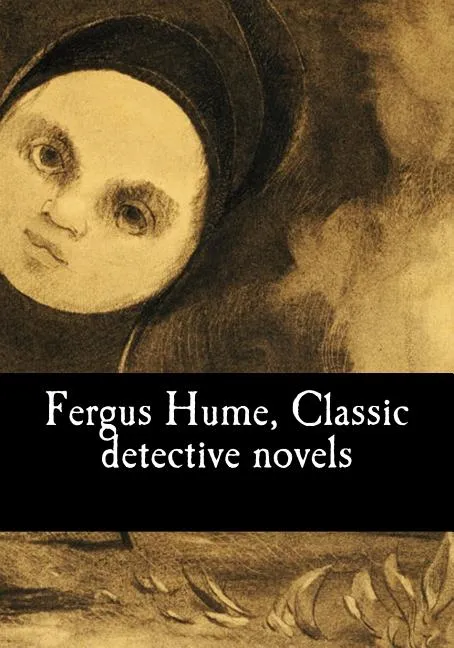
Fergus Hume, Classic detective novels
Report an issue
Tell us what's wrong and we'll take a look.
Thanks – we got it. We'll review and follow up if needed.
Fergusson Wright Hume, known as Fergus Hume (1859 - 1932) was a prolific English novelist producing more than 100 novels and short stories. Finding that the novels of Émile Gaboriau were then very popular, he obtained and read a set of them and determined to write a novel of a similar kind. The result was the self-published novel The Mystery of a Hansom Cab (1886), which became a great success. Hume based his descriptions of poor urban life on his knowledge of Little Bourke Street. It eventually became the best selling mystery novel of the Victorian era. This novel inspired Arthur Conan Doyle to write A Study in Scarlet. In this book: The Millionaire Mystery The Lady from Nowhere The Lost Parchment
Fergus Hume
Ferguson Wright Hume, more commonly known as Fergus Hume, was a renowned English novelist primarily celebrated for his works in detective fiction, thrillers, and mysteries. Born on July 8, 1859, in England, Hume gained widespread recognition for his mastery in crafting suspenseful plots and intriguing characters. His breakthrough came with the publication of The Mystery of a Hansom Cab, a work that established him as a prominent figure in the genre. Throughout his career, Hume produced numerous works, many of which revolved around complex crimes and the meticulous investigations that followed. He was known for his ability to keep readers on edge with unpredictable twists and well-constructed narratives. Hume lived much of his later life in Thundersley, where he passed away on July 12, 1932, at the age of 73. His literary legacy endures, particularly in the realm of detective fiction, where he remains an influential figure. His parents were James Hume and Mary Ferguson. Hume s ability to combine suspense with complex characters earned him a loyal readership and cemented his place in literary history.
More by Fergus Hume







Why Readwise Books?
Readwise Books is an ebook & audiobook platform that automatically logs how much you and your friends read, making it fun and easy to read more. Learn more →