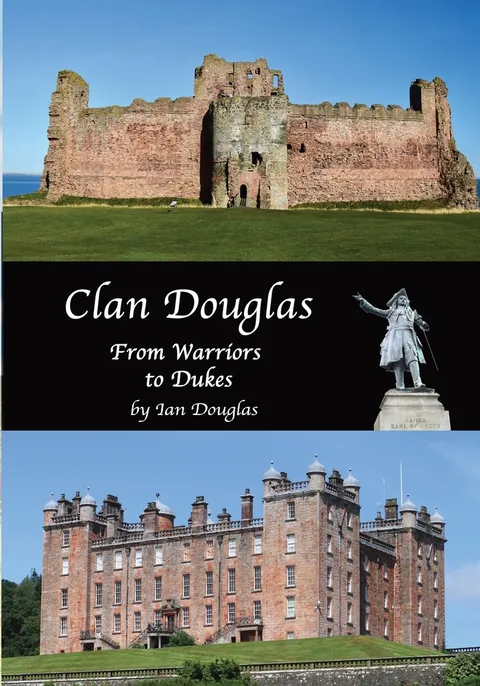
Clan Douglas - From Warriors to Dukes
Report an issue
Tell us what's wrong and we'll take a look.
Thanks – we got it. We'll review and follow up if needed.
From the Wars of Independence around 1300 until the Union in 1707 Clan Douglas was the most powerful clan in lowland Scotland, apart from the royal house of Stewart. By the end of the 14th century the Douglases had split into two main dynasties, the Red and the Black, with several cadet dynasties. The dynasties were often enemies and rivals rather than allies. For four hundred years at least one dynasty or another was involved in most of the major events in Scottish history. The rich and powerful Douglases left a legacy of great castles, visible evidence of their power, across lowland Scotland and the Scottish borders. This book the history of the clan and its impact on the history of Scotland along the way.
The six main sites which anyone with an interest in Douglas history should visit are: Douglas - little remains of the castle but the church and village is steeped in Douglas history. Tantallon - where the Red Douglas dynasty split from the Black. Bothwell - the home of the Black Douglases, and of the Murrays, another great Scottish clan, before them. Threave - from where the Black Douglases exercised control over Galloway, a wild and sometimes lawless region. Hermitage - another great border castle. Drumlanrig - once a castle, but rebuilt as a palace. A Scottish renaissance building with priceless works of art. And a further four Douglas castles, all worth seeing, are also covered: Aberdour, Loch Leven, Morton and Newark.
Ian Douglas
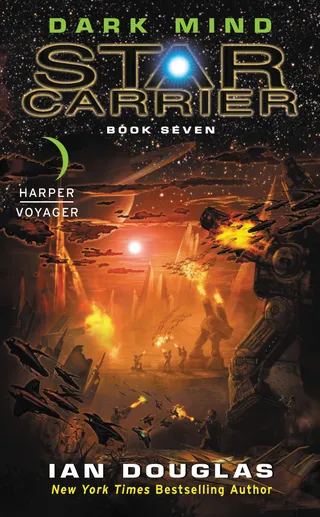
Ian Douglas is one of the many pseudonyms for writer William H. Keith, the New York Times bestselling author of the popular military science fiction series The Heritage Trilogy, The Legacy Trilogy, The Inheritance Trilogy, The Star Corpsman series, The Andromedan Dark series, and The Star Carrier series. A former naval corpsman, he lives in Pennsylvania.
More by Ian Douglas


Why Readwise Books?
Readwise Books is an ebook & audiobook platform that automatically logs how much you and your friends read, making it fun and easy to read more. Learn more →