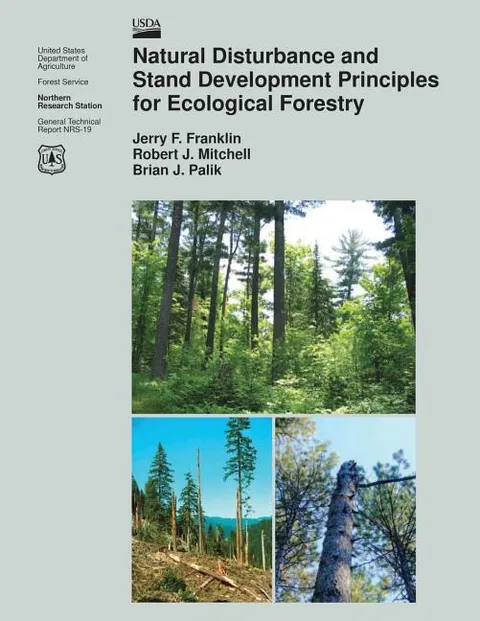
Natural Disturbance and Stand Development Principles for Ecological Forestry
Report an issue
Tell us what's wrong and we'll take a look.
Thanks – we got it. We'll review and follow up if needed.
Foresters use natural disturbances and stand development processes as models for silvicultural practices in broad conceptual ways. Incorporating an understanding of natural disturbance and stand development processes more fully into silvicultural practice is the basis for an ecological forestry approach. Such an approach must include 1) understanding the importance of biological legacies created by a tree regenerating disturbance and incorporating legacy management into harvesting prescriptions; 2) recognizing the role of stand development processes, particularly individual tree mortality, in generating structural and compositional heterogeneity in stands and implementing thinning prescriptions that enhance this heterogeneity; and 3) appreciating the role of recovery periods between disturbance events in the development of stand complexity. We label these concepts, when incorporated into a comprehensive silvicultural approach, the "three-legged stool" of ecological forestry.








Why Readwise Books?
Readwise Books is an ebook & audiobook platform that automatically logs how much you and your friends read, making it fun and easy to read more. Learn more →