Report an issue
Tell us what's wrong and we'll take a look.
Thanks – we got it. We'll review and follow up if needed.
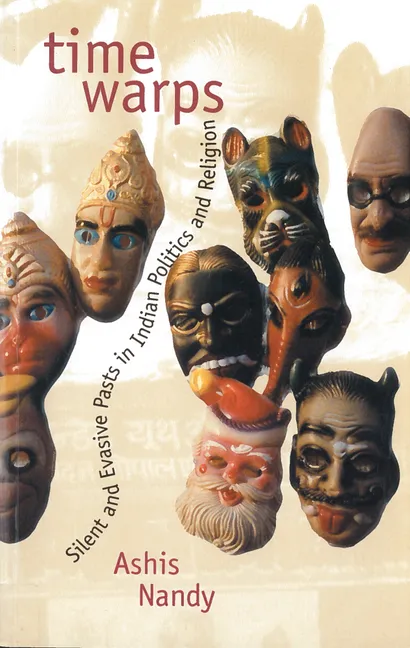
Ashis Nandy, one of India's foremost public intellectuals, contends in this book that India's political and cultural élites have been trying to impose a secular ideology on their country. This ideology makes little sense to most Indians, who have their own religious and cultural lives, their own diverse pasts, and their own principles of tolerance and hospitality.
Religious extremists have exploited this tension by offering packaged forms of ancient faiths, with ready-made theories of violence and hatred. The resulting clash has fragmented Indians' views of their precolonial past as well as their increasingly globalized present. In a country with deep roots in legendary pasts, some of these pasts have been made "silent" or "evasive" in the service of modern ideological agendas. They are no longer as easily drawn upon to oppose the forces of intolerance and hatred.
Most of the essays survey the ways in which India's colonial secularism has produced some of the conditions for the current rise of Hindu nationalism. He shows how both religious nationalists and secular modernists have employed the colonial state's ideology-producing power to blend the "religious" and "secular" domains. In the process, the indigenous traditions battling sectarianism and religious extremism have been marginalized. Nandy argues that it is possible to reclaim India's rich, multicultural pasts and alternative forms of cosmopolitanism in order to rescue a truly multicultural present.
Ashis Nandy
Wolfgang Sachs is an author and research director at the Wuppertal Institute for Climate, Environment and Energy, in Germany. He has been chair of the board of Greenpeace Germany, a member of the Intergovernmental Panel on Climate Change, and is a member of the Club of Rome. Amongst the various appointments he has held are co-editor of the Society for International Development's journal Development; visiting professor of science, technology and society at Pennsylvania State University and fellow at the Institute for Cultural Studies in Essen. He regularly teaches at Schumacher College and as Honorary Professor at the University of Kassel.
Wolfgang Sachs's first English book, For Love of the Automobile: Looking Back into the History of Our Desires, was published by the University of California Press in 1992. Several of his works have been published by Zed Books. They include the immensely influential Development Dictionary: A Guide to Knowledge as Power (edited, 1992), which has since been translated into numerous languages; Global Ecology: A New Arena of Political Conflict (edited, 1993); Greening the North: A Post-Industrial Blueprint for Ecology and Equity (co-authored with Reinhard Loske and Manfred Linz, 1998); Planet Dialectics: Explorations in Environment and Development (1999) and (with T. Santarius et al) Fair Future: Resource Conflicts, Security, and Global Justice (2007).
More by Ashis Nandy




Why Readwise Books?
Readwise Books is an ebook & audiobook platform that automatically logs how much you and your friends read, making it fun and easy to read more. Learn more →