Report an issue
Tell us what's wrong and we'll take a look.
Thanks – we got it. We'll review and follow up if needed.
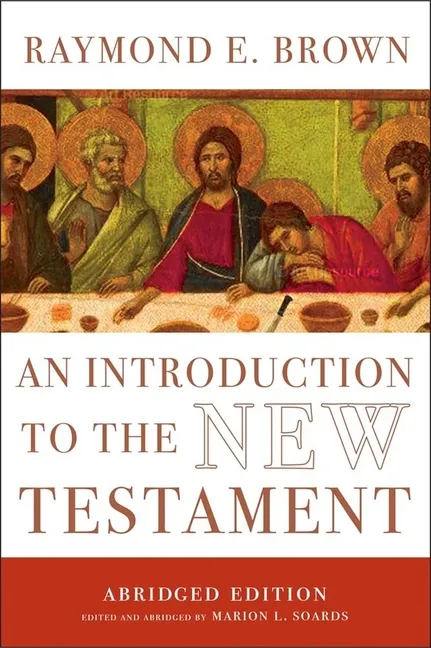
Since its publication in 1997, Raymond Brown's Introduction to the New Testament has been widely embraced by modern readers seeking to understand the Christian Bible. Acknowledged as a paragon of New Testament studies in his lifetime, Brown was a gifted communicator who wrote with ease and clarity.
Abridged by Marion Soards, who worked with Brown on the original text, this new, concise version maintains the essence and centrist interpretation of the original without tampering with Brown's perspective, insights, or conclusions. The biblical writings themselves remain the focus, but there are also chapters dealing with the nature, origin, and interpretation of the New Testament texts, as well as chapters concerning the political, social, religious, and philosophical world of antiquity. Furthermore, augmenting Brown's commentary on the New Testament itself are topics such as the Gospels' relationship to one another; the form and function of ancient letters; Paul's thought and life, along with his motivation, legacy, and theology; a reflection on the historical Jesus; and a survey of relevant Jewish and Christian writings.
This comprehensive, reliable, and authoritative guidebook is now more accessible for novices, general readers, Bible study groups, ministers, scholars, and students alike.
Raymond E Brown
Fr. Raymond E. Brown, S.S., (1928-1998) was the Auburn Distinguished Professor of Biblical Studies at Union Theological Seminary in New York City. He was author of some forty books on the Bible and past president of three of the most important biblical societies in the world. By appointment of two popes (Paul VI in 1972, John Paul II in 1996) Brown was a member of the Roman Pontifical Biblical Commission. Time magazine called him "probably the premier Catholic Scripture scholar of the U.S."
More by Raymond E Brown



Why Readwise Books?
Readwise Books is an ebook & audiobook platform that automatically logs how much you and your friends read, making it fun and easy to read more. Learn more →