
Artic Adventure by Sea and Land
Report an issue
Tell us what's wrong and we'll take a look.
Thanks – we got it. We'll review and follow up if needed.
This work has been selected by scholars as being culturally important, and is part of the knowledge base of civilization as we know it. This work was reproduced from the original artifact, and remains as true to the original work as possible. Therefore, you will see the original copyright references, library stamps (as most of these works have been housed in our most important libraries around the world), and other notations in the work.
This work is in the public domain in the United States of America, and possibly other nations. Within the United States, you may freely copy and distribute this work, as no entity (individual or corporate) has a copyright on the body of the work.
As a reproduction of a historical artifact, this work may contain missing or blurred pages, poor pictures, errant marks, etc. Scholars believe, and we concur, that this work is important enough to be preserved, reproduced, and made generally available to the public. We appreciate your support of the preservation process, and thank you for being an important part of keeping this knowledge alive and relevant.
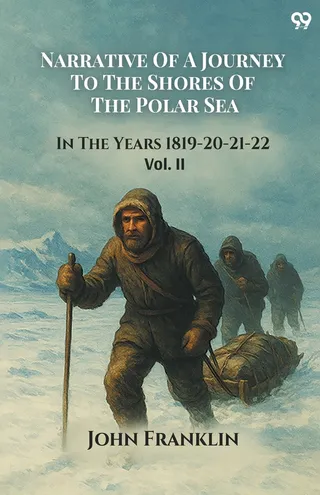
John Franklin
Sir John Franklin was a British Royal Navy officer, explorer, and colonial administrator. After serving in significant military conflicts such as the Napoleonic Wars and the War of 1812, he led two major expeditions into the Canadian Arctic: the Coppermine expedition in 1819 and the Mackenzie River expedition in 1825. Later, he served as Lieutenant-Governor of Van Diemen's Land from 1837 to 1843. His final expedition in 1845 aimed to navigate the Northwest Passage. However, Franklin's ships became trapped in ice off King William Island, leading to his death in 1847, along with his entire crew due to starvation, hypothermia, and scurvy. Franklin was born on April 16, 1786, in Spilsby, Lincolnshire, as the ninth child of a family with merchant and agricultural roots. His early life was marked by a desire to improve his social standing, as several of his siblings pursued diverse careers. Despite his father s initial objections, Franklin pursued a seafaring career and joined the Royal Navy at the age of 14. His maritime journey eventually led to his significant contributions to Arctic exploration.
More by John Franklin








Why Readwise Books?
Readwise Books is an ebook & audiobook platform that automatically logs how much you and your friends read, making it fun and easy to read more. Learn more →