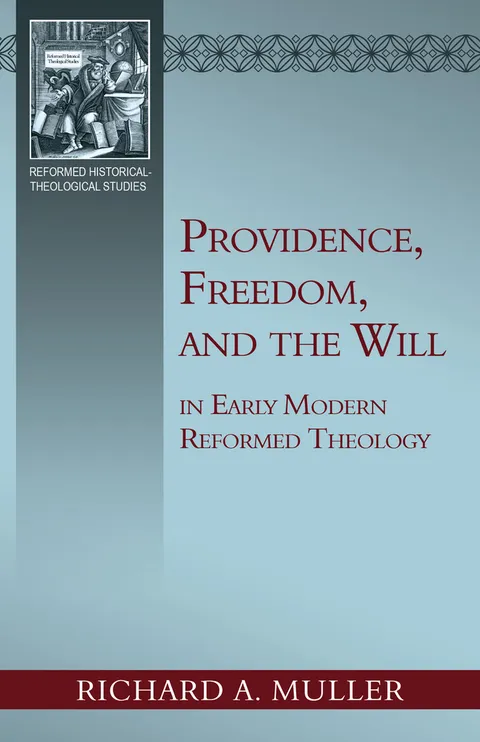
Providence, Freedom, and the Will in Early Modern Reformed Theology
Report an issue
Tell us what's wrong and we'll take a look.
Thanks – we got it. We'll review and follow up if needed.
Too often scholars impose on the past modern terms and theories. This is particularly evident concerning discussions of divine sovereignty and human responsibility, where libertarian and compatibilist notions of freedom obscure older understandings of concurrence. Providence, Freedom, and the Will is one historian's attempt to help us interpret early modern documents in context with attention to their theological and philosophical terminology. In it, Richard A. Muller investigates the Reformed approach to causality and governance as it relates to divine concurrence with creaturely or temporal causes. He examines treatments of grace and freedom concerning the capabilities of the will as a free cause, operating of its own accord. And he explains free choice in the light of traditional assumptions concerning faculty psychology and the way in which external objects are selected or rejected.
Richard A Muller
Richard A. Muller (PhD, Duke University) is P. J. Zondervan Professor of Historical Theology Emeritus at Calvin Theological Seminary in Grand Rapids, Michigan. He also serves as scholar in residence for Reformation and post-Reformation studies at Puritan Reformed Theological Seminary. He has authored over a dozen books, including Calvin and the Reformed Tradition and the multivolume Post-Reformation Reformed Dogmatics.
More by Richard A Muller


Why Readwise Books?
Readwise Books is an ebook & audiobook platform that automatically logs how much you and your friends read, making it fun and easy to read more. Learn more →