Report an issue
Tell us what's wrong and we'll take a look.
Thanks – we got it. We'll review and follow up if needed.
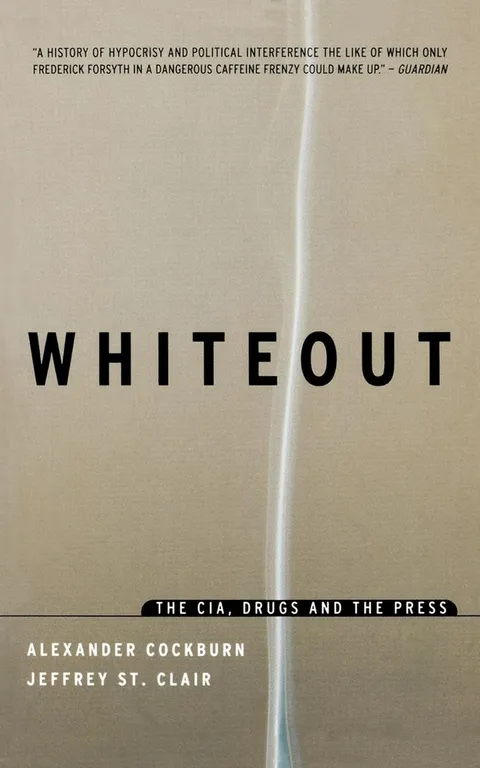
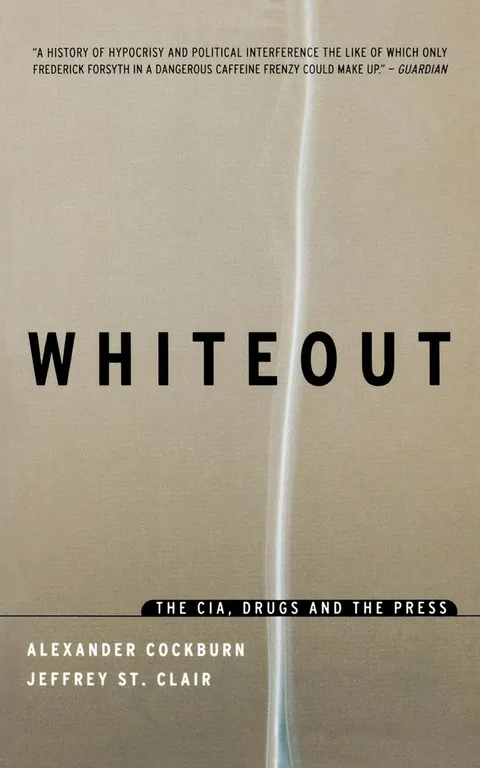
A shocking expose of the CIA’s role as drug baron. On March 18, 1998, the CIA’s Inspector General, Fred Hitz, told astounded US Reps that the CIA had maintained relationships with companies and individuals that the Agency knew to be involved in the drug business. More shocking was the revelation that the CIA had received from Reagan’s Justice Department clearance not to report any knowledge it might have of drug-dealing by CIA assets. Many years’ worth of CIA denials, much of it under oath to Congress, were sunk. Hitz’s admissions made fools of some of the most prominent names in US journalism and vindicated others that had been ruined. Particularly resonant was the case of the San Jose Mercury News, which published a sensational series on CIA involvement in the smuggling of cocaine into black urban neighborhoods, and then under pressure conspired in the destruction of its own reporter, Gary Webb. In Whiteout, Alexander Cockburn and Jeffrey St. Clair finally put the whole story together, from the earliest days, when the CIA’s institutional ancestors cut a deal with America’s premier gangster and drug trafficker, Lucky Luciano. This is a thrilling history that stretches from Sicily in 1944 to the killing fields of Laos and Vietnam, to CIA safe houses in Greenwich Village and San Francisco where CIA men watched Agency-paid prostitutes feed LSD to unsuspecting clients. We meet Oliver North, as he plotted with Manuel Noriega and Central American gangsters. We travel to little-known airports in Costa Rica and Arkansas. We hear from drug pilots and accountants from the Cali Cartel. We learn of DEA agents whose careers were ruined because they tried to tell the truth. Cockburn and St. Clair show how the CIA’s complicity with drug-dealing criminal gangs was part and parcel of its attacks on labor organizers, whether on the docks of New York, Marseilles, or Shanghai. They trace how the Cold War and counter-insurgency led to an alliance between the Agency and the vilest of war criminals like Klaus Barbie, or fanatic opium traders like the mujahedin in Afghanistan. Cockburn and St. Clair horrifyingly affirm charges of outraged black communities that the CIA had undertaken enduring programs of experiments on minorities. They show that the CIA imported Nazi scientists straight from their labs at Dachau and Buchenwald and set to work, developing chemical and biological agents, tested on blacks, some of them in mental hospitals. Cockburn and St. Clair dissect the shameful way American journalists have not only turned a blind eye to the Agency’s misdeeds, but also helped plunge the knife into those who tried to tell the truth. Fact-packed and fast-paced, Whiteout is a richly detailed excavation of the CIA’s dirtiest secrets. For anyone who wants to know the real truth about the Agency, this is the book to start with.
Alexander Cockburn
Alexander Cockburn (1941-2012) was the coeditor of CounterPunch and the author of a number of titles, including Corruptions of Empire, The Golden Age Is in Us, Washington Babylon (with Ken Silverstein) and Imperial Crusades. One of three brothers, all journalists, he is the son of the journalist and author Claud Cockburn. Born in Ireland and educated in Scotland and England, he moved to America in 1972, soon establishing himself as a radical reporter and commentator, writing for the Village Voice, the New York Review of Books, Esquire and Harpers. He also wrote regular columns for the Nation, Wall Street Journal, Los Angeles Times, New Statesman, and his influential newsletter CounterPunch. In 1991 he settled in Petrolia, a rural hamlet in Humboldt County, Northern California, where he remained until his death.
More by Alexander Cockburn

Jeffrey St. Clair
Jeffrey St. Clair co-edits CounterPunch with Alexander Cockburn. Together they have written Whiteout: The CIA, Drugs and the Press and A Dime's Worth of Difference: Beyond the Lesser of Two Evils.
More by Jeffrey St. Clair






Why Readwise Books?
Readwise Books is an ebook & audiobook platform that automatically logs how much you and your friends read, making it fun and easy to read more. Learn more →