Report an issue
Tell us what's wrong and we'll take a look.
Thanks – we got it. We'll review and follow up if needed.
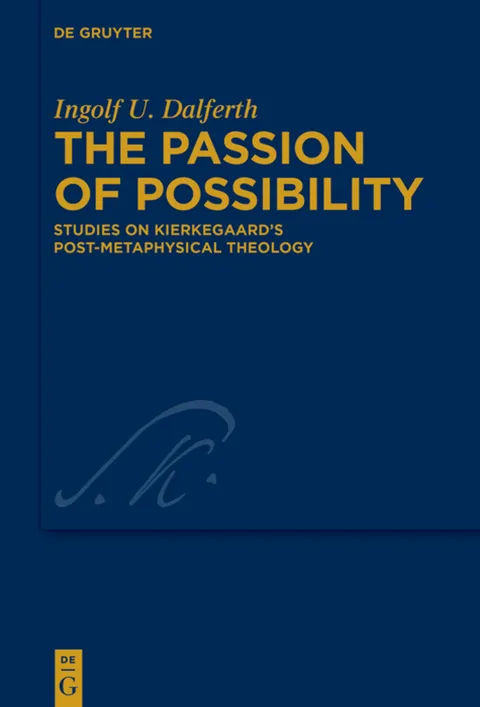
For Kierkegaard the most important thing in life is to become a single individual or a true self. We are all born as human beings, but this makes us only members of a crowd, not true selves. To become a true self, we must transcend what we are at any given time and orient ourselves to the possible and to the actuality of the possible, to which all that is possible owes itself. True selves exist only in becoming, they are fragile, and that is their strength. They are not grounded by their own activities, but in a reality extra se, the flip side of which is a deep passivity that underlies all their activity and allows them to continually leave themselves and move beyond their respective actualities toward the new and the possible. Therefore, without the passion of possibility, there is no truly single individual. This study of Kierkegaard's post-metaphysical theology outlines his existential phenomenology of the self by exploring in three parts what Kierkegaard has to say about the sense of self (finitude, uniqueness, self-interpretation, and alienation), about selfless passion (anxiety, trust, hope, and true love), and about how to become a true self (a Christian in Christendom and a neighbor of God's neighbors).
Ingolf U Dalferth
Ingolf Dalferth has taught theology at the University of Zurich since 1995, having previously held posts at Frankfurt and at Tubingen. His other works include Jenseits von Mythos und Logos and Gedeutete Gegenwart: Zur Wahrnehmung Gottes in den Erfahrungen der Zeit.
More by Ingolf U Dalferth


Why Readwise Books?
Readwise Books is an ebook & audiobook platform that automatically logs how much you and your friends read, making it fun and easy to read more. Learn more →