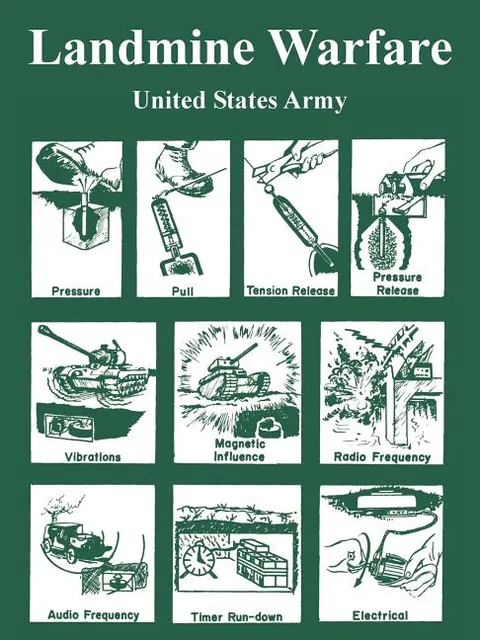
Landmine Warfare
Report an issue
Tell us what's wrong and we'll take a look.
Thanks – we got it. We'll review and follow up if needed.
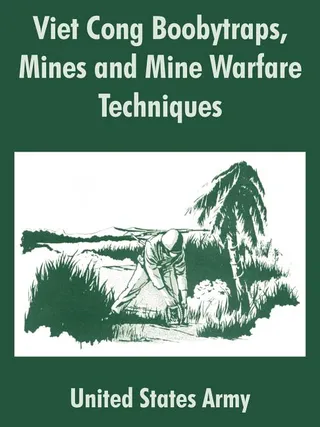
Mines are among the best artificial obstacles---they are portable, installed relatively easily, and constitute a hazard to the enemy; however large scale employment of mines requires considerable time, manpower, and logistical effort. Mines delay and canalize enemy movement, lower the enemy's will to fight, and cause fear of sudden and unexpected casualties. Mines, in contrast to passive obstacles such as road craters and barbed wire, are termed active obstacles because of their destructive potential. If placed in a location where movement is confined such as at a ford or on a bridge approach, a few mines can create an obstacle; however, mines are more frequently employed to create obstacles by distributing them in quantity over a relatively large area. Although mines may be used individually for the purpose of causing casualties, this manual is primarily concerned with the employment of mines as obstacles.
United States Army
Issued as an official United States Army publication during the First World War, this manual documents the organization, procedures, and operational standards of the Motor Transport Corps -- the branch responsible for moving men, equipment, and supplies by motor vehicle across the logistical networks that sustained the American Expeditionary Forces. It represents the unglamorous but decisive reality that modern war runs on gasoline, spare parts, and dispatch schedules.
More by United States Army





Why Readwise Books?
Readwise Books is an ebook & audiobook platform that automatically logs how much you and your friends read, making it fun and easy to read more. Learn more →