The Road to Kells
Report an issue
Tell us what's wrong and we'll take a look.
Thanks – we got it. We'll review and follow up if needed.
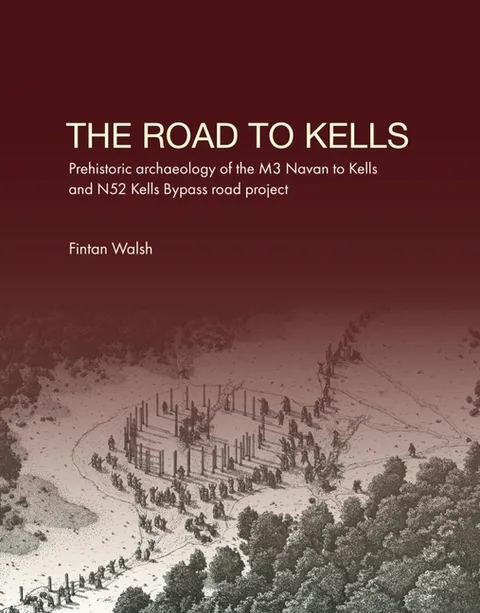
The story begins with Mesolithic hunter-gatherers, who foraged in a forested, primeval landscape, and left traces of a campsite on a gravel ridge in Cakestown Glebe, by the River Blackwater. It continues, chapter by chapter, over a span of c. 5,000 years, recording the homes, burial grounds, work and worship of Neolithic, Bronze Age and Iron Age communities. It brings us at last to the threshold of history, in the Iron Age/early medieval transition period, when we meet agricultural workers on tillage land in Kilmainham, stoking the cereal-drying kilns that would secure their surplus grain harvest for the winter. Kells was not yet the seat of a famous monastery at that time but had already become a central place in the region, with a tribal capital at Commons of Lloyd, on the hill that overlooks the town today.
Fintan Walsh
Fintan Walsh is Professor of Performing Arts and Humanities and Director of Birkbeck Centre for Contemporary Theatre at Birkbeck, University of London, UK. His recent books include the collection Theatres of Contagion: Transmitting Early Modern to Contemporary Performance (Methuen Drama 2020) and the monograph Queer Performance and Contemporary Ireland (2016). He is a former editor of the Theatre Research International, and editor of the book series Contemporary Performance Texts.
More by Fintan Walsh


Why Readwise Books?
Readwise Books is an ebook & audiobook platform that automatically logs how much you and your friends read, making it fun and easy to read more. Learn more →