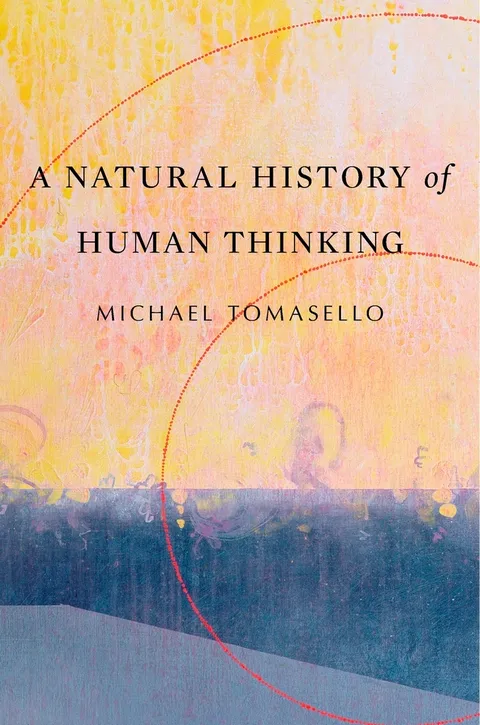
A Natural History of Human Thinking
Report an issue
Tell us what's wrong and we'll take a look.
Thanks – we got it. We'll review and follow up if needed.
A Wall Street Journal Favorite Read of the Year
A Guardian Top Science Book of the Year
Tool-making or culture, language or religious belief: ever since Darwin, thinkers have struggled to identify what fundamentally differentiates human beings from other animals. In this much-anticipated book, Michael Tomasello weaves his twenty years of comparative studies of humans and great apes into a compelling argument that cooperative social interaction is the key to our cognitive uniqueness. Once our ancestors learned to put their heads together with others to pursue shared goals, humankind was on an evolutionary path all its own.
"Michael Tomasello is one of the few psychologists to have conducted intensive research on both human children and chimpanzees, and A Natural History of Human Thinking reflects not only the insights enabled by such cross-species comparisons but also the wisdom of a researcher who appreciates the need for asking questions whose answers generate biological insight. His book helps us to understand the differences, as well as the similarities, between human brains and other brains."
--David P. Barash, Wall Street Journal
Michael Tomasello
Michael Tomasello is the James Bonk Distinguished Professor of Psychology and Neuroscience at Duke University, and Emeritus Director at the Max Planck Institute for Evolutionary Anthropology in Leipzig. His research focuses on processes of cooperation, communication, and cultural learning in human children and other great apes. His many publications include Primate Cognition, Why We Cooperate, Becoming Human: A Theory of Ontogeny, and The Evolution of Agency.
More by Michael Tomasello





Why Readwise Books?
Readwise Books is an ebook & audiobook platform that automatically logs how much you and your friends read, making it fun and easy to read more. Learn more →