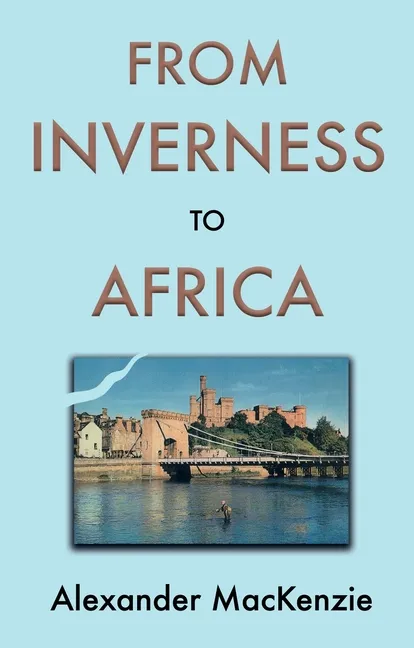
From Inverness to Africa
The Autobiography of Alexander MacKenzie, a Builder, in his Own Words
Report an issue
Tell us what's wrong and we'll take a look.
Thanks – we got it. We'll review and follow up if needed.
A unique recollection of social life and changes in the Highlands of Scotland in the early twentieth century. It documents not only a personal struggle to succeed in the construction industry from straitened circumstances in Inverness before and during the First World War, but also a search for advancement through work in the British Empire.
The author enterprisingly sailed for Africa in 1927 and spent several adventurous years working in Kenya. Convinced he could find work at home; he returned in 1931 and was immediately pitched into the difficulties of the Depression. Moving from job to job, he eventually spent time in the army during the Second World War. Encountering further difficulties in finding work at the end of the war he returned to Africa and eventually rose to be senior clerk of works in the western province of Northern Rhodesia (Zambia).
After retirement in 1960 he became a Consultant Engineer's site inspector on several major construction works in Scotland, notably the Cruachan power station and a major graving dock on the Clyde.
From Inverness to Africa is a personal recollection of Alexander MacKenzie's life, edited by his son John M. MacKenzie.
Alexander MacKenzie
Alexander Mackenzie was a Scottish historian, writer, editor, and politician born in 1838 in Gairloch, Scotland. He was the son of Kenneth Mackenzie and Annabella Maciver. Raised in a rural crofting community, he had limited access to formal education and worked early in life as a laborer and ploughman. His deep connection to Highland culture and history inspired a lifelong passion for preserving Scottish heritage, especially the traditions and stories of the clans. Eventually, he moved into journalism and became the editor of the Celtic Magazine, a significant publication focused on Gaelic culture and Highland affairs. Mackenzie published numerous genealogical and historical works, with a particular focus on clan histories, which gained him respect among Scottish scholars and nationalists. Through his books and magazine work, he became a vocal advocate for the cultural and political interests of the Highlands, often critiquing land policies and supporting tenant rights. His ability to blend folklore, oral history, and documentation into accessible narratives helped shape public understanding of Scotland s past. Alexander Mackenzie died in 1898 at the age of 60, leaving behind a substantial contribution to Scottish historical literature and cultural preservation.
More by Alexander MacKenzie







Why Readwise Books?
Readwise Books is an ebook & audiobook platform that automatically logs how much you and your friends read, making it fun and easy to read more. Learn more →